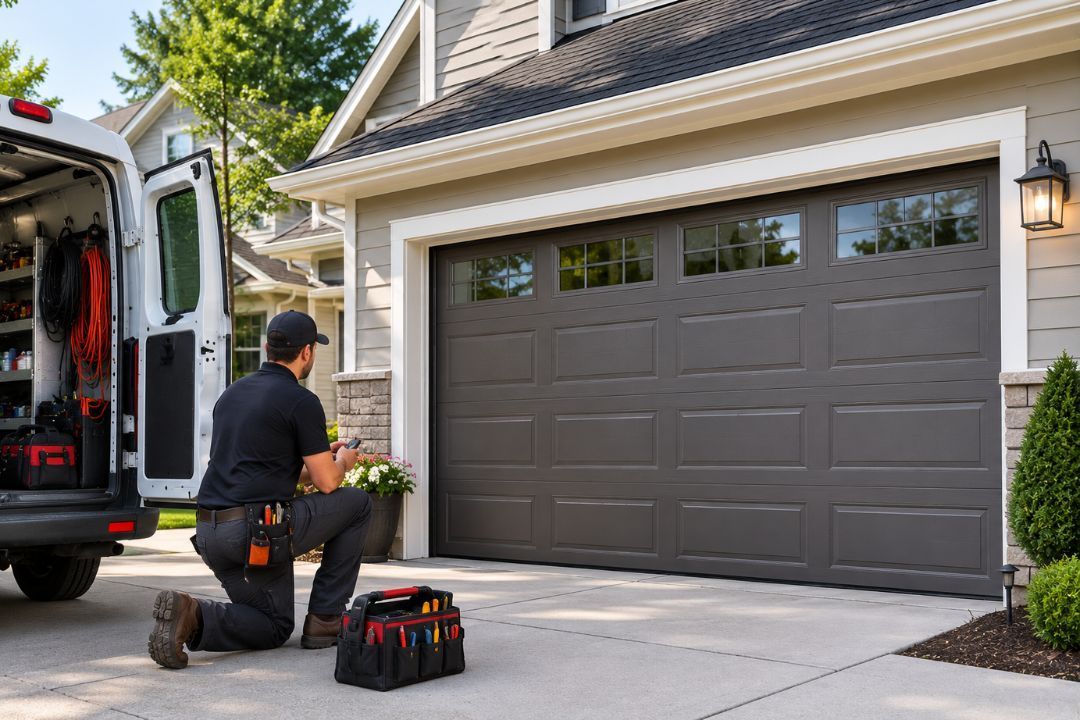
Garage Door Installation for New Construction: A Builder’s Guide to NWA Projects
Garage Door Installation for New Construction: A Builder’s Guide to NWA Projects

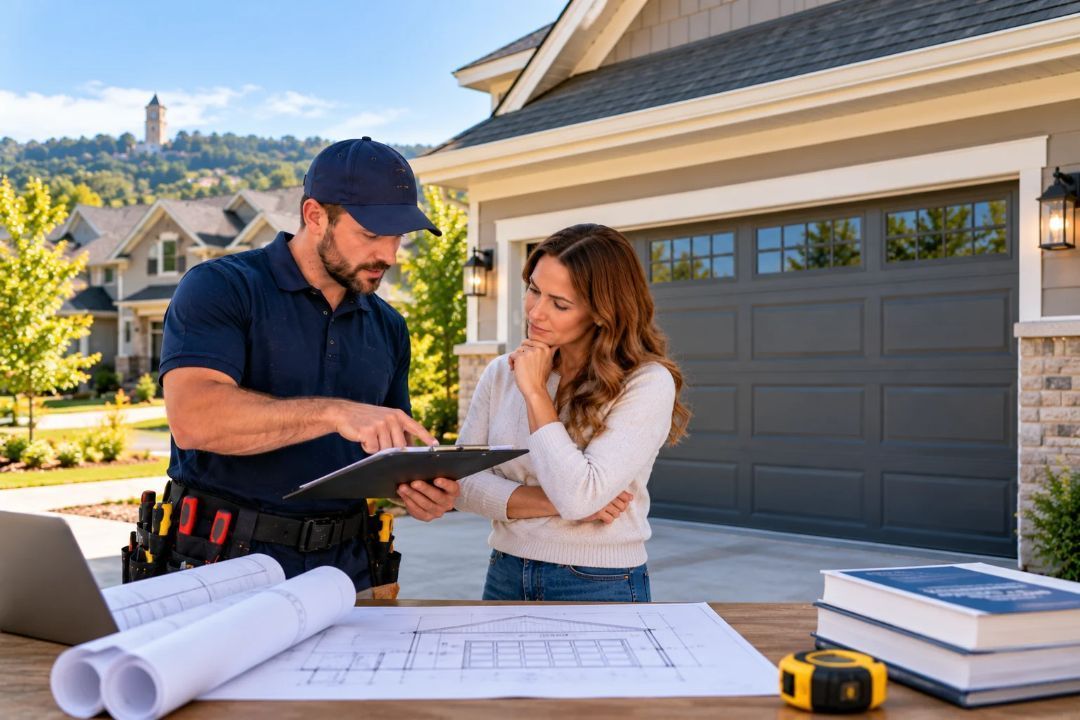
Garage door installation for new construction goes smoothly when doors are ordered early, the opening is framed to the door manufacturer’s specs, and the install is timed after the garage is dried in. Builders who plan for headroom, opener power, and lead times avoid most delays and change orders.
The costly problems usually start before the door company shows up. A duct run or a beam gets dropped into the space above the opening, and the standard track no longer fits. Now the project needs different hardware, a new order, and another week.
When Should Builders Order Garage Doors for a New Build?
Order garage doors as soon as the homebuyer or owner has chosen the style, ideally during framing. Custom colors, window designs, and specialty doors can take longer to arrive than standard models.
Waiting until trim-out to choose a door leaves little room for backorders. On a spec home, locking in a door package early keeps the schedule predictable.
Lead time is one of the biggest differences between door suppliers. Fayetteville Garage Door Co. works to keep
builder lead times short, so crews aren’t waiting months on doors.
What Should the Framing Crew Know Before the Door Arrives?
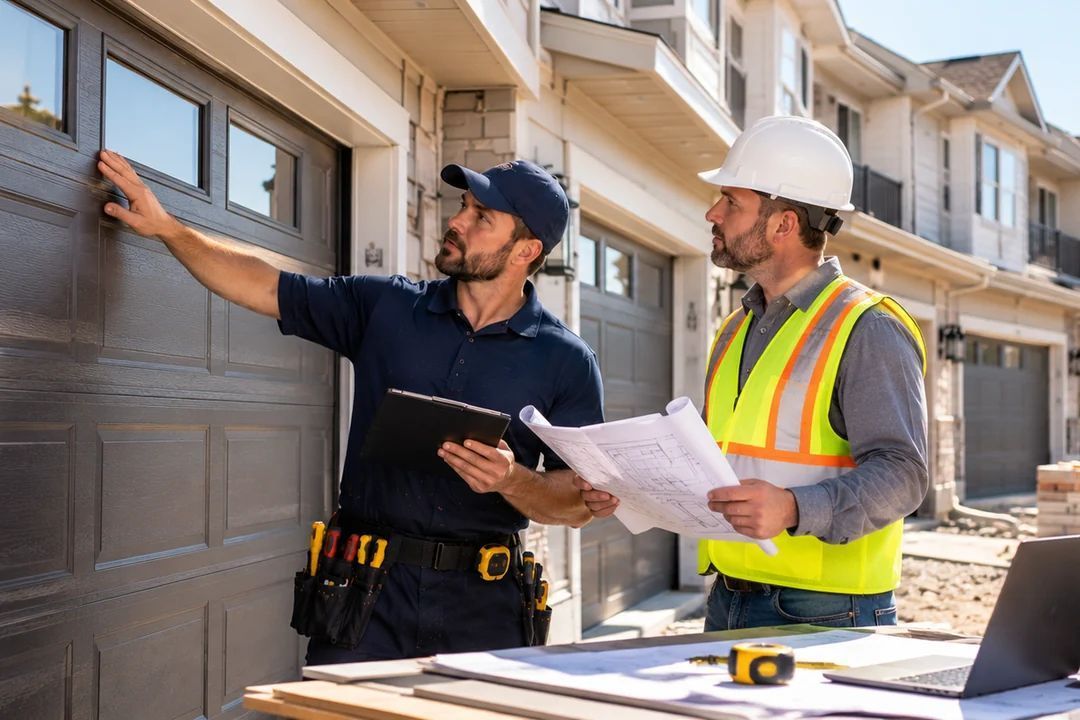
The framing crew needs the door manufacturer’s specs for rough opening, headroom, backroom, and side room before the garage is framed. Those measurements decide which track and spring system will fit.
Each one controls a different part of the install:
- Rough opening: The finished width and height of the door, framed square and plumb.
- Headroom: The space between the top of the opening and the ceiling, where the springs and track curve.
- Backroom: The depth into the garage the door and opener need when fully open.
- Side room: The wall space on each side of the opening for the vertical track.
Keep that space clear. Ductwork, can lights, beams, and plumbing in the door’s path are the most common reasons a planned door no longer fits. A garage slab that isn’t level at the opening also leaves gaps under the door.
When Should Garage Doors Be Installed on a New Home?
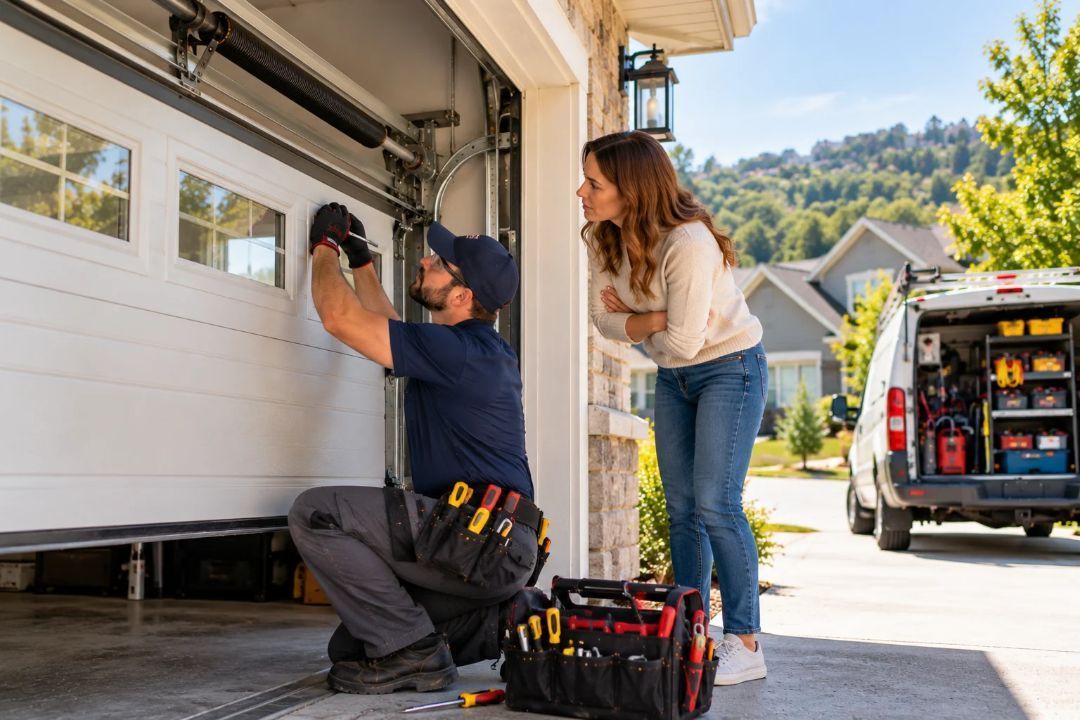
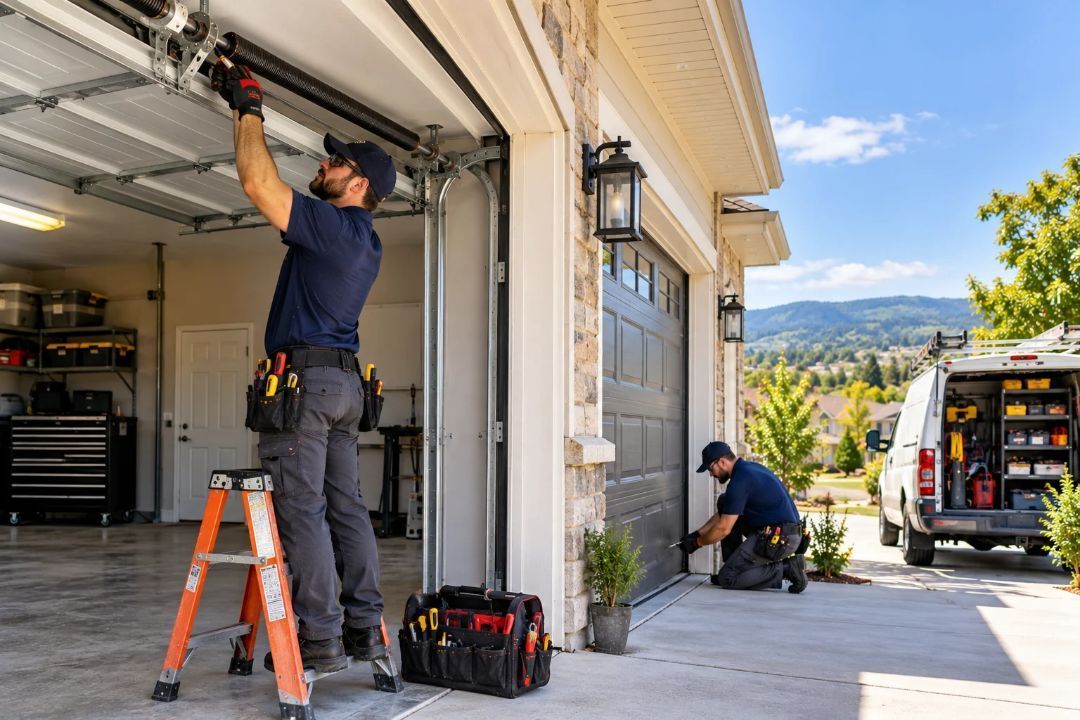
Install garage doors once the opening is framed, the header and jambs are finished, and the garage is dried in. Many builders install them early enough to lock up the house and secure materials.
That timing is a real trade-off. For builders planning garage door installation in Anderson, MO, coordinating the installation with the construction schedule helps protect the door from damage and avoid delays during the final stages of the project. An early door protects tools and appliances stored in the garage. It also takes dents from trailers, ladders, and other trades moving in and out.
Some builders install the door early and add the opener and final adjustments near closing. That keeps the house secure without leaving the finished system exposed for months.
What Do Garage Door Openers Need During Construction?
Openers need a ceiling outlet near the planned motor location, a wall button location, and clear space for photo-eye sensors near the floor. Plan those with the electrician before drywall.
Federal rules require openers to have reversing systems and external entrapment protection like photo eyes. A missing outlet or a wall button placed where the user can’t see the door creates problems at final walkthrough.
Openers, keypads, and other accessories can be ordered with the doors. Fayetteville Garage Door Co. installs
openers and keyless entries as part of new construction work.
What Door Options Matter to Homebuyers?
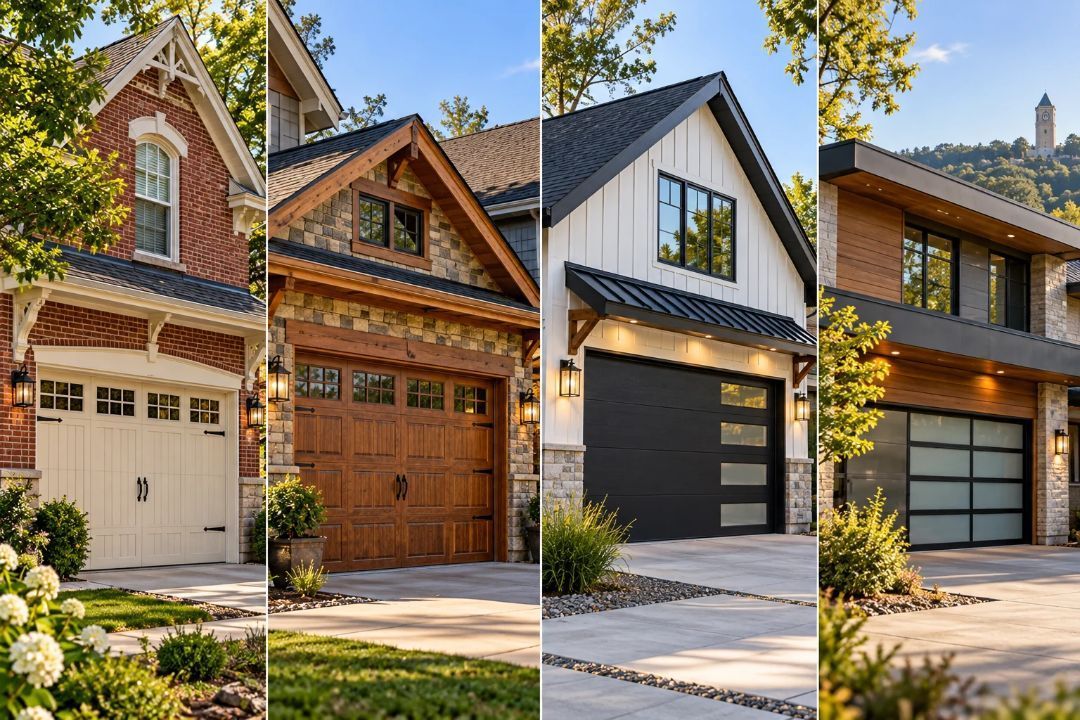
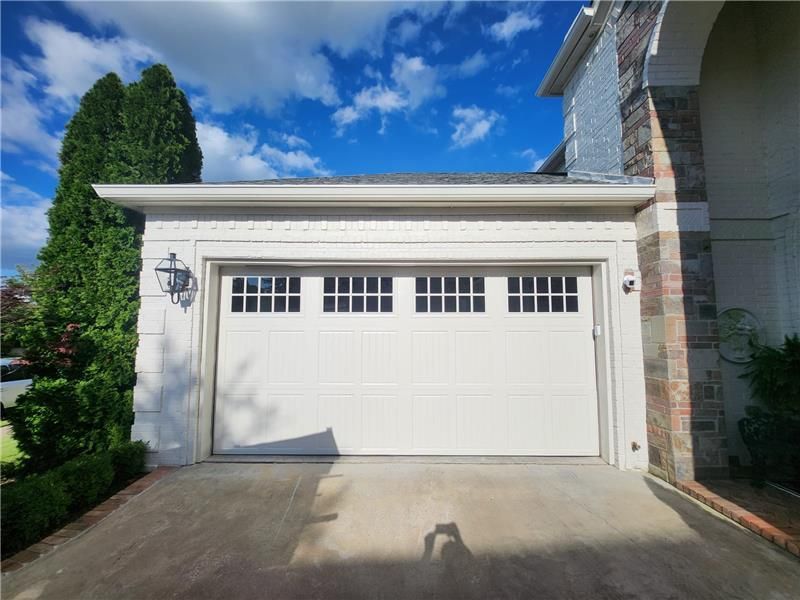
Homebuyers notice style, insulation, and windows first. Builders can offer a short menu of door options that fit the home’s design and price point.
Insulated doors help keep attached garages more comfortable and quieter. Windows and carriage-house designs add curb appeal on the front elevation. Our
residential garage door lineup includes doors from suppliers like Amarr and CHI.
What Changes on Commercial and Multi-Unit Projects?
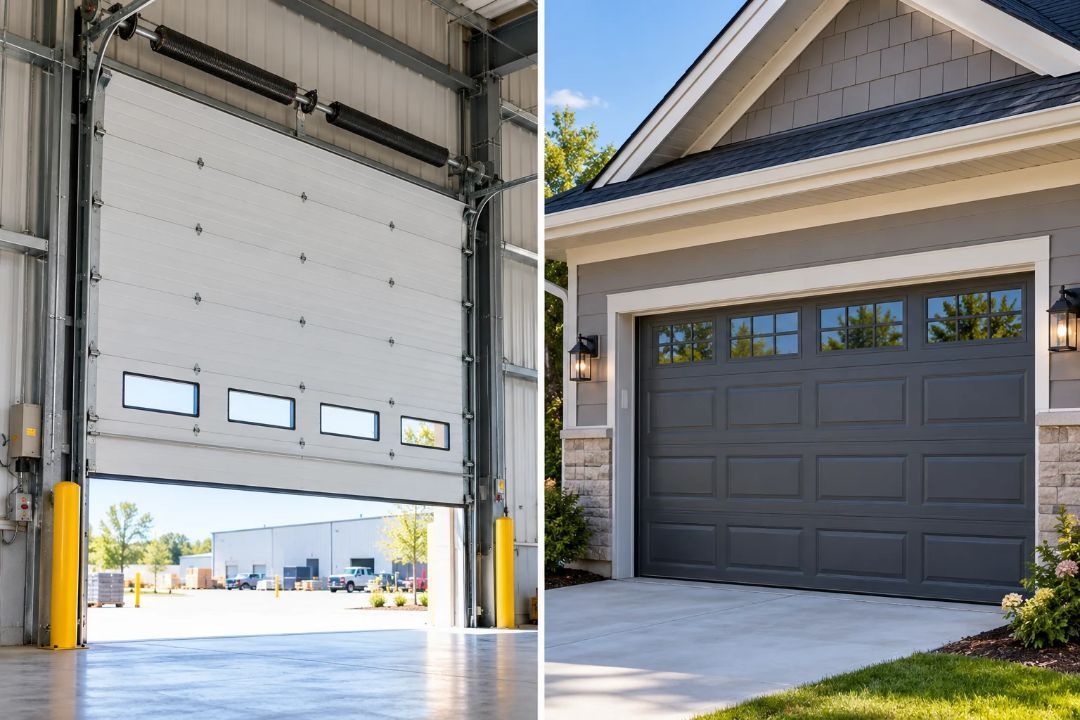
Commercial and multi-unit projects add larger doors, heavier-duty operators, and sometimes loading dock equipment. Coordination across several buildings matters more than any single install.
Warehouse and shop projects often weigh rolling steel against sectional doors. Distribution buildings may also need dock levelers planned into the slab design.
Our
commercial door team works with contractors on schedules for single buildings and multi-building sites.
Frequently Asked Questions:
1.When is the garage door installed in new construction?
In garage door installation for new construction, the door usually goes in after the opening is framed, the header and jambs are finished, and the garage is dried in. Openers are often completed closer to final.
2. What is headroom for a garage door?
Headroom is the space between the top of the door opening and the ceiling. It determines which spring and track system can be used.
3. What if there isn’t enough headroom?
Low-headroom track and spring systems exist for tight garages. Planning headroom during framing is simpler and avoids special hardware.
4.Should the garage door opener be installed with the door?
It can be, but many builders install the opener near the end of construction to avoid damage. Either way, the ceiling outlet should be planned before drywall.
5. Can one company handle doors across a whole subdivision?
Yes. Using one installer across a subdivision keeps door styles, hardware, and scheduling consistent from lot to lot.
Where Can NWA Builders Get Garage Doors for New Construction?
Fayetteville Garage Door Co. has partnered with
residential and commercial builders on new construction installations of garage doors, operators, and accessories. We serve
Northwest Arkansas,
Southwest Missouri, and
Eastern Oklahoma, and we have worked from Fayetteville since 1972.
That includes new homes and commercial buildings in Fayetteville, Springdale, Rogers, Bentonville, and Centerton.
Contact our builder services team or call 479-521-7877 to talk through your next project.