Loading Dock Levelers Explained: Pit, Edge-of-Dock, and When to Replace
Choosing a commercial door isn't a design decision. It's an operations decision. The wrong door eats your ceiling space, drives up your energy bills, or wears out years early under the traffic you put through it.
For most Northwest Arkansas businesses, the choice comes down to two options: rolling steel or sectional. Both are strong, both are reliable, and neither is universally better. The rolling steel vs sectional door question really depends on your building, your traffic, and what you need the door to do.
Here's how to tell which one fits.
The Quick Answer
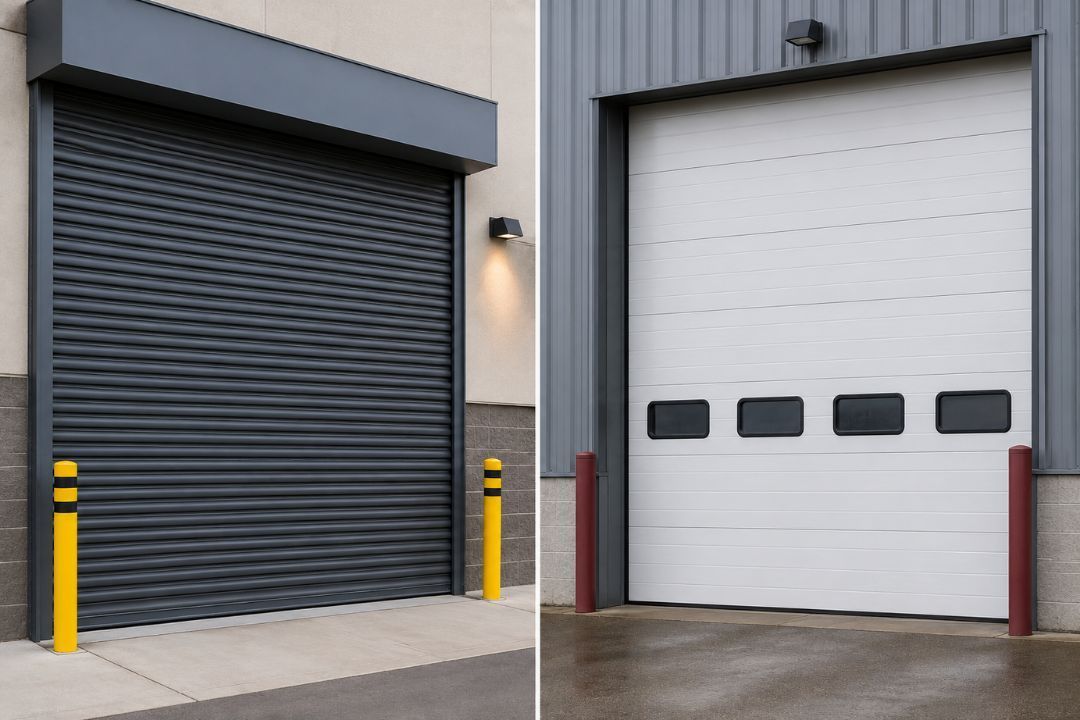
Rolling steel doors coil into a compact barrel above the opening. They need almost no headroom, offer the best security and cycle life, and last longest, but they cost more upfront and insulate less well.
Sectional doors ride up on ceiling tracks in horizontal panels. They cost less to buy and install, insulate far better, and run quieter, but they need real overhead and back room to operate.
How Each Door Actually Works
The mechanics explain almost every difference between them, so it's worth understanding both.
A rolling steel door is a curtain of interlocking steel slats that rolls up into a coil above the opening. It mounts to the face of the wall and needs no connection to your ceiling or roof structure. Everything stays compact and out of the way.
A sectional door is made of large horizontal panels connected by hinges. It travels up a track and then back along your ceiling, resting parallel overhead when open. It's the familiar overhead door, scaled up for commercial use.
Where Rolling Steel Wins
Rolling steel is the heavy-duty choice, and it earns that reputation in a few specific ways:
- Minimal headroom needed. Because it coils into a compact drum, it leaves your ceiling free for lighting, HVAC, sprinklers, and racking.
- Superior security. Heavy-gauge interlocking slats, few exposed parts, and rugged construction make it a genuine deterrent.
- Highest cycle life. Fewer moving parts mean less to fail. A rolling steel door commonly lasts 20 to 30 years and handles heavy daily cycling.
- Custom sizing. Rolling doors can be built to your exact opening, while sectionals only come in fixed increments.
- Low maintenance. Simple design, fewer components, fewer service calls.
The trade-off is a higher upfront cost and weaker insulation. For a warehouse, a manufacturing floor, or a high-traffic loading bay, that trade is usually worth it. Our commercial garage door services cover these installations across the region.
The Three Drive Systems
Pit and EOD describe where the leveler mounts. The drive system describes how it moves, and every leveler has one of three. This choice affects your maintenance costs more than anything else.
- Mechanical. Springs and a pull chain. The cheapest to buy and simplest to install, with no electrical needed. But the springs stay under constant tension, so they need adjustment and hold-down repairs every three to five years, and they require physical effort to operate.
- Air-powered. An airbag raises the deck. Clean, low-maintenance, and easy on operators. Popular in food-grade and washdown environments where oil is a problem.
- Hydraulic. Cylinders and fluid, controlled by a push button. The smoothest and most reliable option, with fewer wear points. It costs more upfront but usually runs 10-plus years with only fluid checks and cleaning.
For a high-traffic dock, a hydraulic is almost always worth the extra investment. The lower long-term maintenance and reduced strain on your crew pay for themselves.
Signs You Need Loading Dock Leveler Repair
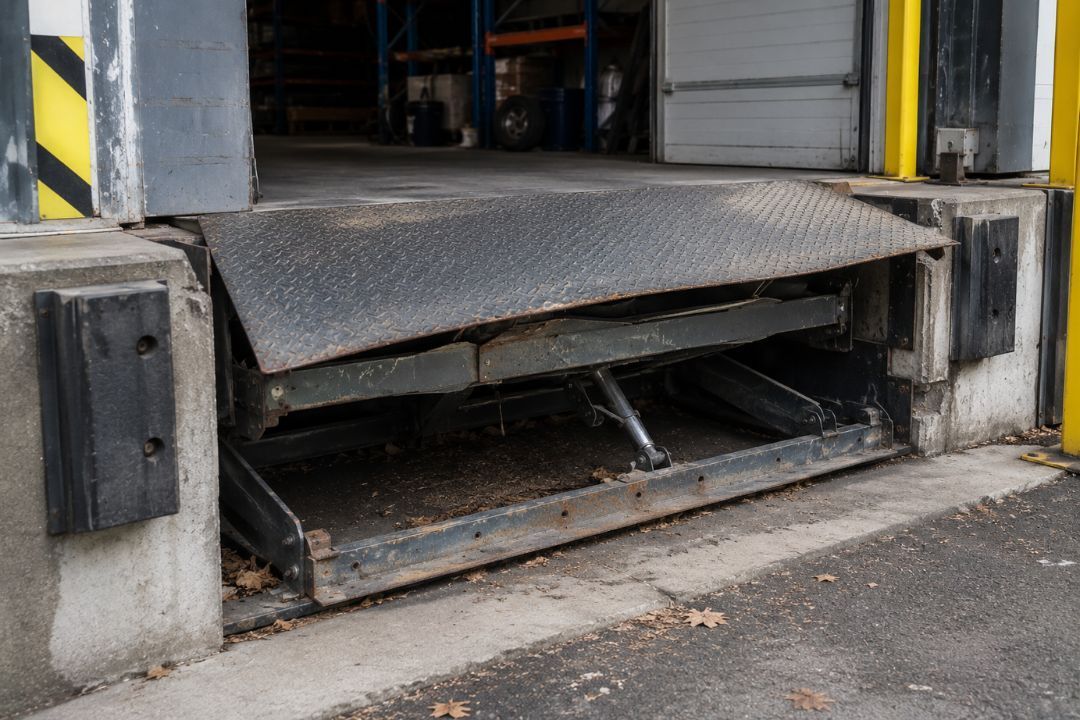
Levelers rarely fail without warning. Watch for these:
- The deck or lip moves slowly, sticks, or won't fully extend
- Hydraulic fluid leaking around the pit
- Unusual noise from the pump or the springs
- The lip won't deploy onto the trailer bed
- The deck sits unevenly or won't hold position under load
- Visible cracks, bends, or heavy rust on the deck or lip
Any of these means the leveler is working against you, and every day you wait, the risk to your crew and your freight grows. Prompt repair is almost always cheaper than the downtime a full failure causes, that;s why you should book garage doror services in Springdale to keep their docks moving.
When to Repair vs. When to Replace
Here's the practical test. Repair makes sense when the leveler's structure is sound and the problem is a specific part: a worn lip assembly, a failing hydraulic pump, tired springs, or damaged bumpers. These are all serviceable.
Replace when the picture looks like this:
- The frame is warped or the structure is compromised. Cracked welds, a bent or warped deck, or heavy corrosion aren't worth repairing.
- Repair costs are escalating. Several service calls in a year means you're paying to keep alive a unit that's at the end of its life.
- Safety mechanisms are failing. If the lip won't lock, the deck won't hold under load, or the fall-safe won't engage, replace it. That's not a place to economize.
- It's outgrown your operation. It's outgrown your operation. If your trucks or loads exceed the leveler's capacity, no repair fixes that. If you're also evaluating your loading area, it's a good time to compare a rolling steel vs sectional door to make sure the rest of your dock equipment matches your operational needs.
- You're upgrading from manual. Moving from a mechanical unit to hydraulic push-button operation cuts crew strain and reduces long-term maintenance.
Keep Your Dock Moving
A dock leveler is easy to ignore until the day it strands a truck at your door. Regular service and timely loading dock leveler repair keep your freight moving and your crew safe, and knowing when to replace a worn unit saves you from repeated downtime.
We've handled commercial doors and loading dock equipment across Northwest Arkansas since 1972, and we know what a dock in full swing demands. Call Fayetteville Door Company at (479) 521-7877 to request a quote.
Frequently Asked Questions
What's the difference between a pit leveler and an edge-of-dock leveler?
A pit leveler sits recessed in a concrete pit and handles trailers up to 12 inches above or below dock height, with much higher load capacity. An edge-of-dock leveler bolts to the dock face without a pit, costs far less, but only handles a few inches of height variation and lighter loads.
How long does a dock leveler last?
With regular maintenance, a quality pit leveler can serve for decades. Hydraulic units in particular often run 10-plus years with only routine fluid checks. Lifespan depends heavily on traffic volume, load weight, and whether the unit gets serviced consistently.
Is a hydraulic leveler worth the extra cost?
For a busy dock, usually yes. Hydraulic units cost more upfront but have fewer wear points, need less maintenance, and eliminate the physical strain of pull-chain operation. Mechanical levelers need spring and hold-down work every three to five years.
Can an edge-of-dock leveler be added without a pit?
Yes, that's the main advantage. EOD units mount directly to the dock face, so no concrete work is needed. That makes them a fast, affordable option for retrofits or facilities that can't build a pit.
What are the signs my leveler needs repair?
Watch for a lip that won't deploy, a deck that moves slowly or sticks, hydraulic leaks, odd noises, or any sign the unit won't hold position under load. Visible cracks or heavy rust are red flags too. Address these promptly, since dock downtime costs far more than the repair.
How often should a dock leveler be serviced?
At least once a year, and more often on a high-traffic dock. Regular service means inspecting the hinges, springs, and hydraulics, checking for leaks, lubricating moving parts, and replacing worn bumpers and wear plates before they cause bigger failures.
Get a Real Number for Your Home
National averages only get you so far. Your true new garage door cost depends on your opening, the material you choose, and whether an opener is part of the job.
As Northwest Arkansas's local garage door company since 1972, we'll help you find the right door for your budget and give you honest, upfront pricing with no surprises.
Call Fayetteville Door Company at (479) 521-7877 to request a quote.