Rolling Steel vs Sectional: Picking the Right Commercial Door for Your NWA Business
Choosing a commercial door isn't a design decision. It's an operations decision. The wrong door eats your ceiling space, drives up your energy bills, or wears out years early under the traffic you put through it.
For most Northwest Arkansas businesses, the choice comes down to two options: rolling steel or sectional. Both are strong, both are reliable, and neither is universally better. The rolling steel vs sectional door question really depends on your building, your traffic, and what you need the door to do.
Here's how to tell which one fits.
The Quick Answer
Rolling steel doors coil into a compact barrel above the opening. They need almost no headroom, offer the best security and cycle life, and last longest, but they cost more upfront and insulate less well.
Sectional doors ride up on ceiling tracks in horizontal panels. They cost less to buy and install, insulate far better, and run quieter, but they need real overhead and back room to operate.
How Each Door Actually Works
The mechanics explain almost every difference between them, so it's worth understanding both.
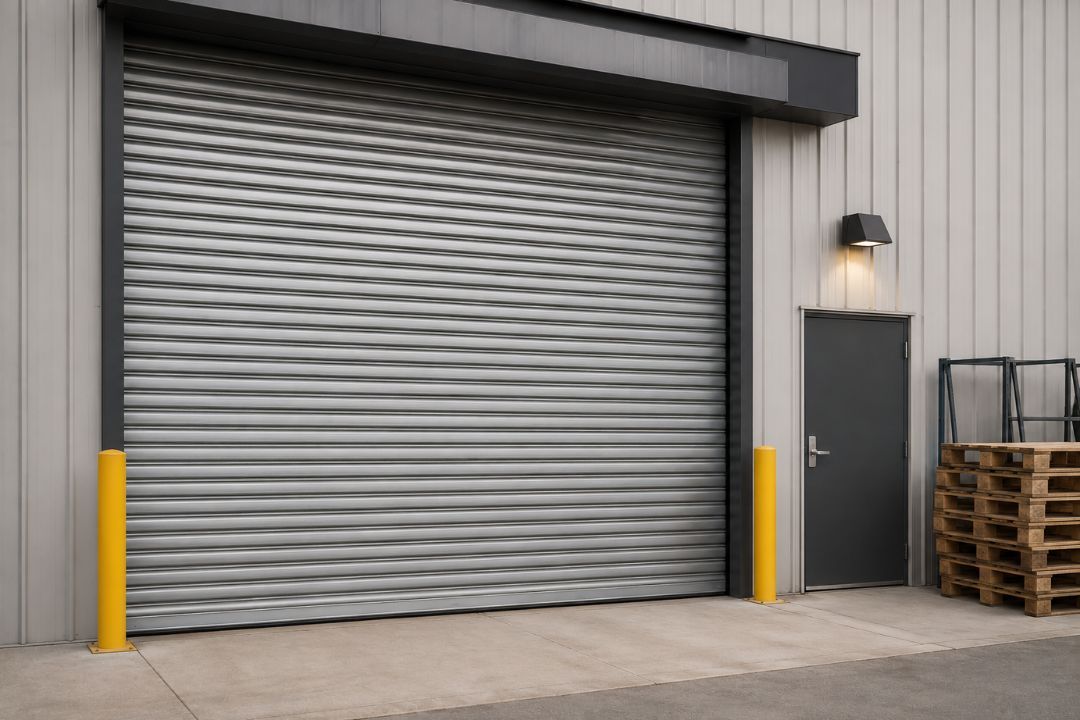
A rolling steel door is a curtain of interlocking steel slats that rolls up into a coil above the opening. It mounts to the face of the wall and needs no connection to your ceiling or roof structure. Everything stays compact and out of the way.
A sectional door is made of large horizontal panels connected by hinges. It travels up a track and then back along your ceiling, resting parallel overhead when open. It's the familiar overhead door, scaled up for commercial use.
Where Rolling Steel Wins
Rolling steel is the heavy-duty choice, and it earns that reputation in a few specific ways:
- Minimal headroom needed. Because it coils into a compact drum, it leaves your ceiling free for lighting, HVAC, sprinklers, and racking.
- Superior security. Heavy-gauge interlocking slats, few exposed parts, and rugged construction make it a genuine deterrent.
- Highest cycle life. Fewer moving parts mean less to fail. A rolling steel door commonly lasts 20 to 30 years and handles heavy daily cycling.
- Custom sizing. Rolling doors can be built to your exact opening, while sectionals only come in fixed increments.
- Low maintenance. Simple design, fewer components, fewer service calls.
The trade-off is a higher upfront cost and weaker insulation. For a warehouse, a manufacturing floor, or a high-traffic loading bay, that trade is usually worth it. Our
commercial garage door services cover these installations across the region.
Where Sectional Wins
Sectional doors have their own real advantages, and for many businesses they're the smarter buy:
- Better insulation. Polyurethane and polystyrene-filled panels deliver much higher R-values, which matters if you heat or cool the space.
- Lower upfront cost. Panels are cheaper to manufacture than a full steel curtain, and installation is simpler.
- Quieter operation. Panels run more smoothly and quietly than metal slats, which is worth a lot in a customer-facing space.
- Design options. Windows, finishes, and styles are all available, so the door can look the part on a storefront.
- Simpler repairs. Individual panels and parts can be serviced without replacing the whole door.
The catch is space. Sectionals need meaningful headroom and backroom for the track, so they don't fit every building.
The Three Questions That Decide It
Skip the feature lists for a moment. Answer these three and the choice usually makes itself.
How much ceiling space do you have? If your headroom is tight, or your ceiling is crowded with HVAC, sprinklers, lighting, or storage racks, rolling steel is likely your only practical option. Sectional tracks need that space.
How hard will the door work? A door cycling dozens of times a day in a busy warehouse needs rolling steel's durability. A door opening a few times a day is well served by a sectional.
Do you heat or cool the space? If climate control matters, a sectional's insulation options will save you real money on energy over the door's life. If the space is unconditioned, that advantage disappears.
Cost: Upfront vs. Total Ownership
Sectional doors win on the initial invoice. They're cheaper to build and faster to install, which makes them the budget-friendly choice for a business watching startup costs.
Rolling steel wins on total cost of ownership in demanding settings. It costs more to install, but its durability and low failure rate mean fewer repairs and a longer service life. In a high-cycle facility, that longevity often makes it the cheaper door over twenty years.
So the honest way to compare them isn't "which costs less." It's "which costs less across the life of the door in my building."
Matching the Door to the Business
Here's how it typically shakes out for Northwest Arkansas operations:
- Warehouses and distribution centers: rolling steel, for the cycle life and clear ceiling.
- Manufacturing and industrial: rolling steel, for durability and security.
- Retail and customer-facing: sectional, for the look, the quiet, and the insulation.
- Climate-controlled storage: sectional, for the R-value.
- Loading docks: either, depending on headroom and traffic. If the dock is busy and the ceiling is tight, rolling steel usually wins.
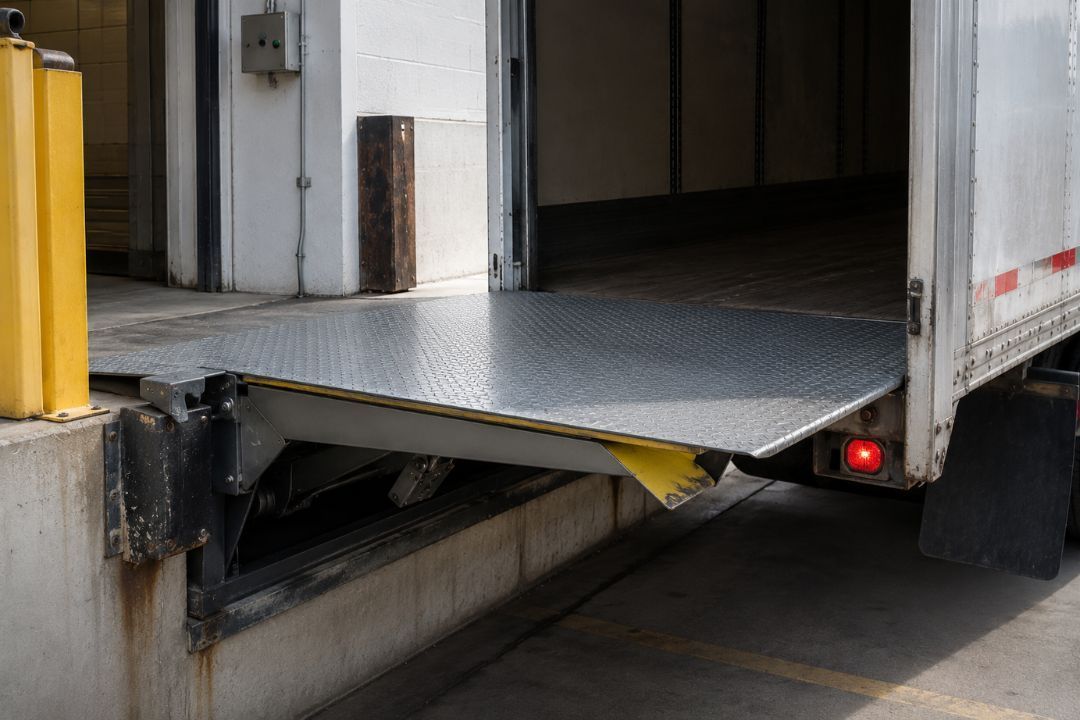
If your loading dock is part of the project, it's worth checking your dock equipment at the same time, since a worn leveler creates the same slowdowns a failing door does. Businesses that need loading dock leveler repair often find it makes sense to handle both together.
Get the Right Door for Your Building
The rolling steel vs sectional door decision comes down to your space, your traffic, and your climate needs. Get it right and the door disappears into your operation. Get it wrong and you'll be working around it for the next two decades.
We've been outfitting commercial buildings across Northwest Arkansas since 1972, and we'll help you match the right door to your building and your workload. Businesses looking for garage door services in Rogers, AR and across the region can call Fayetteville Door Company at (479) 521-7877 to request a quote.
Frequently Asked Questions
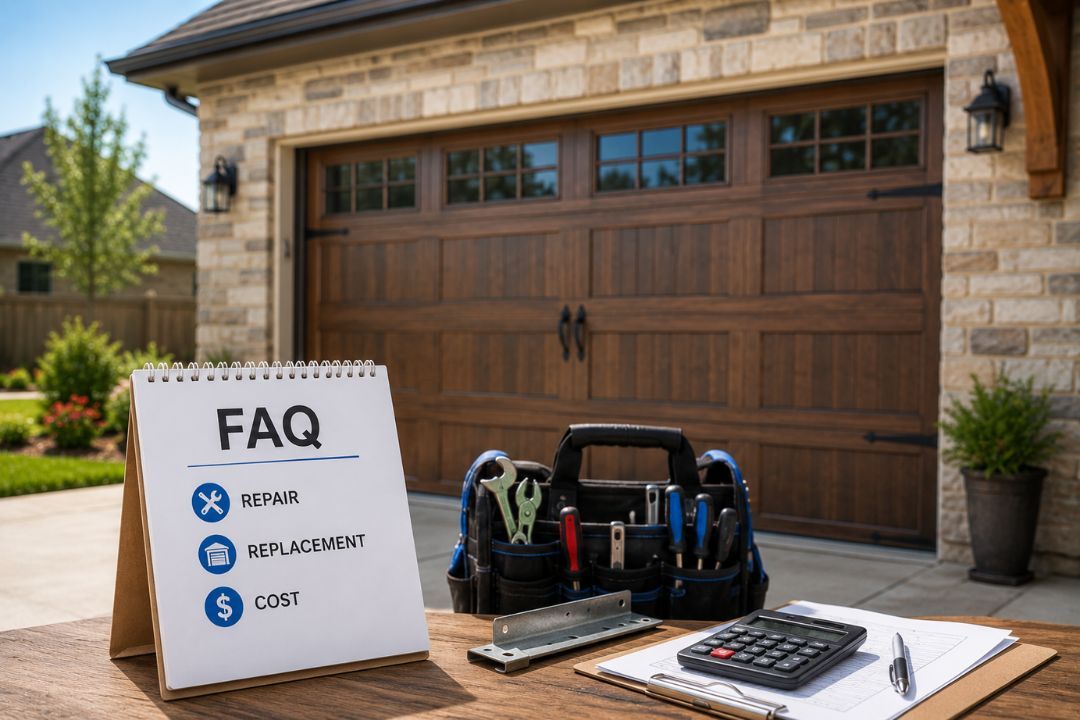
What is the average new garage door cost?
For most Fayetteville homes, a single-car door runs $600 to $2,700 installed, averaging around $1,400. A double-car door runs $1,000 to $4,500, averaging near $3,000. Material, insulation, and size determine where in that range you land, and an opener or custom features push it higher.
Is an insulated garage door worth the extra cost?
For an attached garage, yes. Insulation adds $150 to $600 but steadies the temperature, cuts noise, and makes the door sturdier and less prone to denting. If your garage is detached and unheated, you can safely skip it and put the savings elsewhere.
What's the cheapest garage door material?
Steel, by a wide margin, and it also happens to be the most popular. It's strong, secure, and needs little maintenance, which is why most homes have one. Wood sits at the opposite end, offering the most beautiful look at the highest price and the most upkeep.
Does the quote include installation and old door removal?
It usually does, but always ask. Some companies quote an all-in price covering the door, hardware, labor, and hauling away your old door. Others list labor separately at $200 to $500, so confirm exactly what's covered before you compare two quotes side by side.
Do I need a new opener with a new door?
Not always. If your current opener is in good shape and strong enough for the new door's weight, it can often be reused. If it's aging or underpowered, replacing both together is the smarter long-term choice, since a new door will outlive a worn opener anyway.
Does a new garage door increase home value?
It does, and reliably so. A replacement returns roughly 90% of its cost at resale and instantly refreshes your home's appearance, since the door takes up so much of the front. An insulated door adds energy savings on top of that return.
Get a Real Number for Your Home
National averages only get you so far. Your true new garage door cost depends on your opening, the material you choose, and whether an opener is part of the job.
As Northwest Arkansas's local garage door company since 1972, we'll help you find the right door for your budget and give you honest, upfront pricing with no surprises.
Call Fayetteville Door Company at (479) 521-7877 to request a quote.