Garage Door Safety Features Every NWA Homeowner Should Know
Garage Door Safety Features Every NWA Homeowner Should Know
The most important garage door safety features are the opener’s auto-reverse system, the photo-eye sensors near the floor, and the emergency release cord. Federal rules have required reversing openers since 1991 and a second entrapment protection device since 1993. Test both every month, and never bypass a sensor.
Here is a setup that turns up in older garages. The photo eyes kept blinking, so someone zip-tied them together above the track. The door closes fine now. It also no longer knows when a child or a pet is underneath it.
What Safety Features Does a Garage Door Opener Need?
Every garage door opener should have two layers of protection: a reversing system that backs the door up when it hits something, and an external device like photo eyes that reverses it before contact. Both have been federal requirements for decades.
The U.S. Consumer Product Safety Commission requires reversing systems on openers made or imported for sale after January 1, 1991. A second, external entrapment protection requirement was added in 1993. That device can be a photo eye, a door edge sensor, or another device that offers the same protection.
If your opener has no sensors near the floor, it likely predates those rules. You should replace that opener, even if it still runs well.
How Do Photo-Eye Sensors Work?
Photo-eye sensors send an invisible beam across the garage door opening. If anything breaks the beam while the door is closing, the opener stops and reverses the door.
The CPSC says photo-eyes should sit 4 to 6 inches above the floor. That height catches a crawling child or a pet, not only an adult.
Sensors fail in ordinary ways. A bumped bracket knocks them out of line, dust covers a lens, or low sun shines straight into one. A blinking light usually means one of these problems, and the fix is to realign or clean it. Never tape, tie, or remove them.
How Do You Test Your Garage Door’s Safety Reverse?
Test the reversing system once a month by closing the door on a 2x4 board laid flat in its path, then by waving an object through the photo-eye beam. The door should reverse both times.
Here is the monthly check:
- Contact test: Lay a 2x4 flat on the floor in the center of the opening and close the door. It should reverse after touching the board.
- Photo-eye test: Start closing the door and pass a broom handle or box through the beam. The door should stop and go back up.
- Visual check: Look at springs, cables, and rollers for fraying, gaps, or damage without touching them.
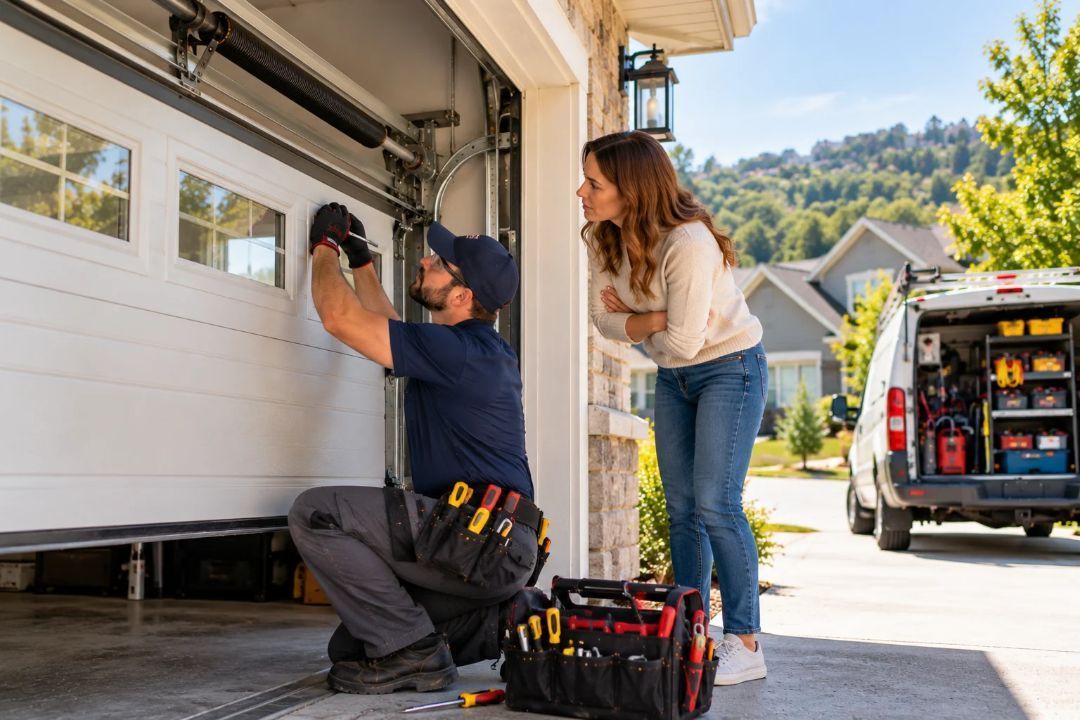
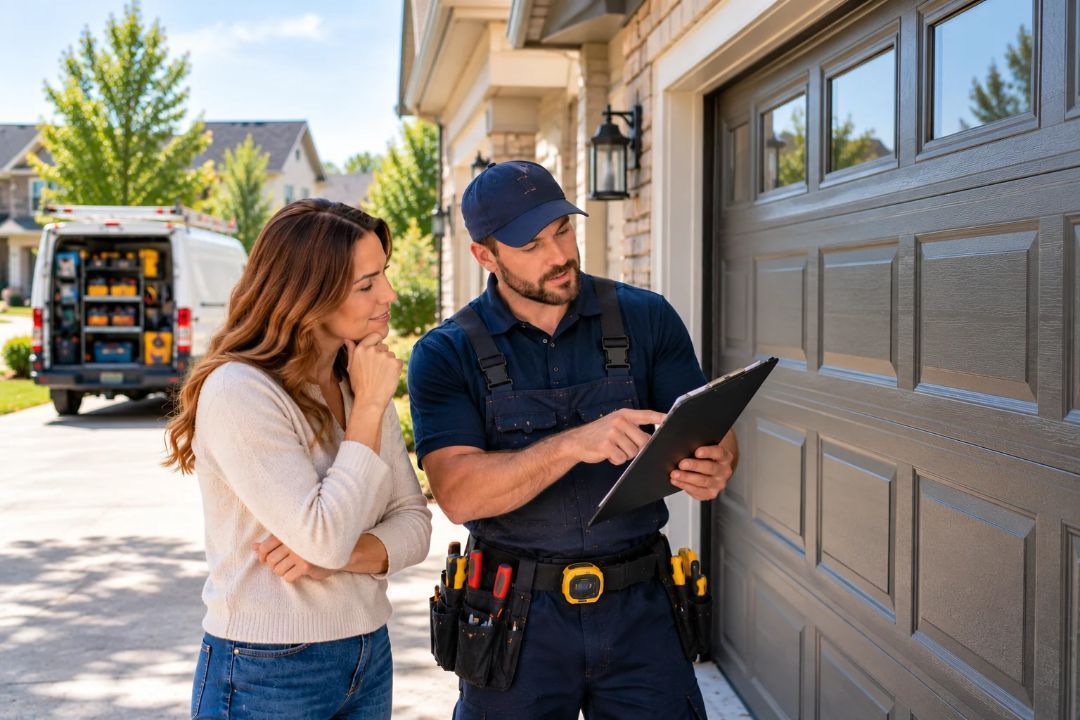
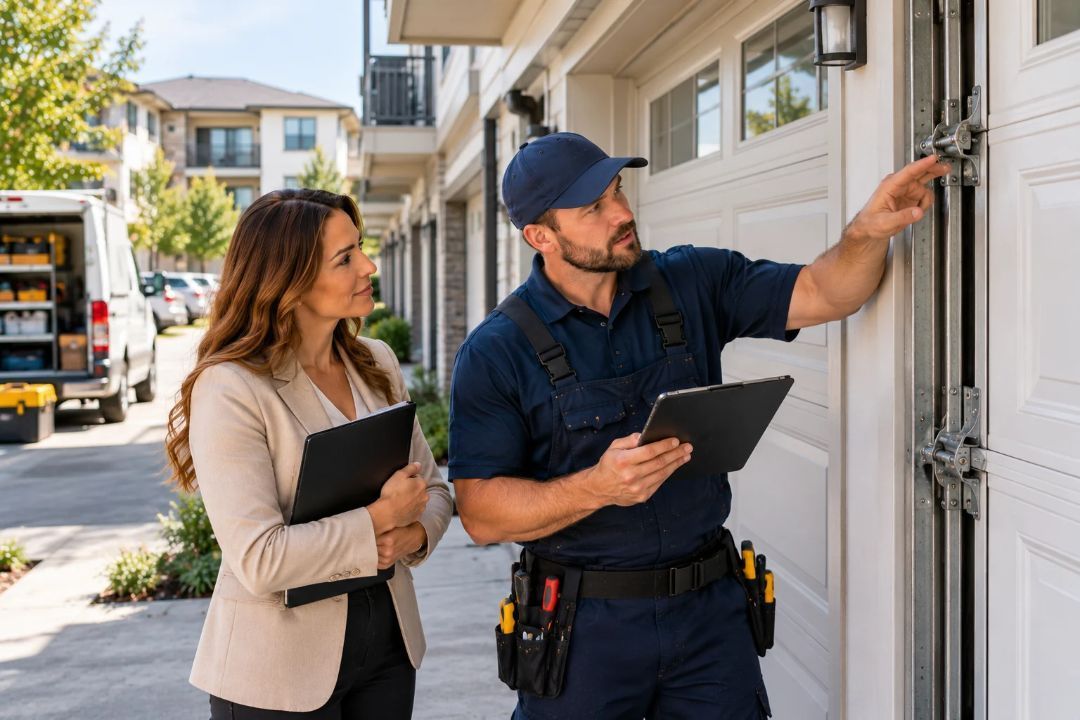
If the door fails either reverse test, the CPSC advises disengaging the opener until you adjust or repair it. Our technicians can check and adjust it during a
garage door safety inspection.
What Safety Features Are Built Into the Door Itself?
Door hardware also has its own safety features. These include spring systems designed to stay contained, pinch-resistant panel joints on many newer doors, and bottom brackets built to resist tampering.
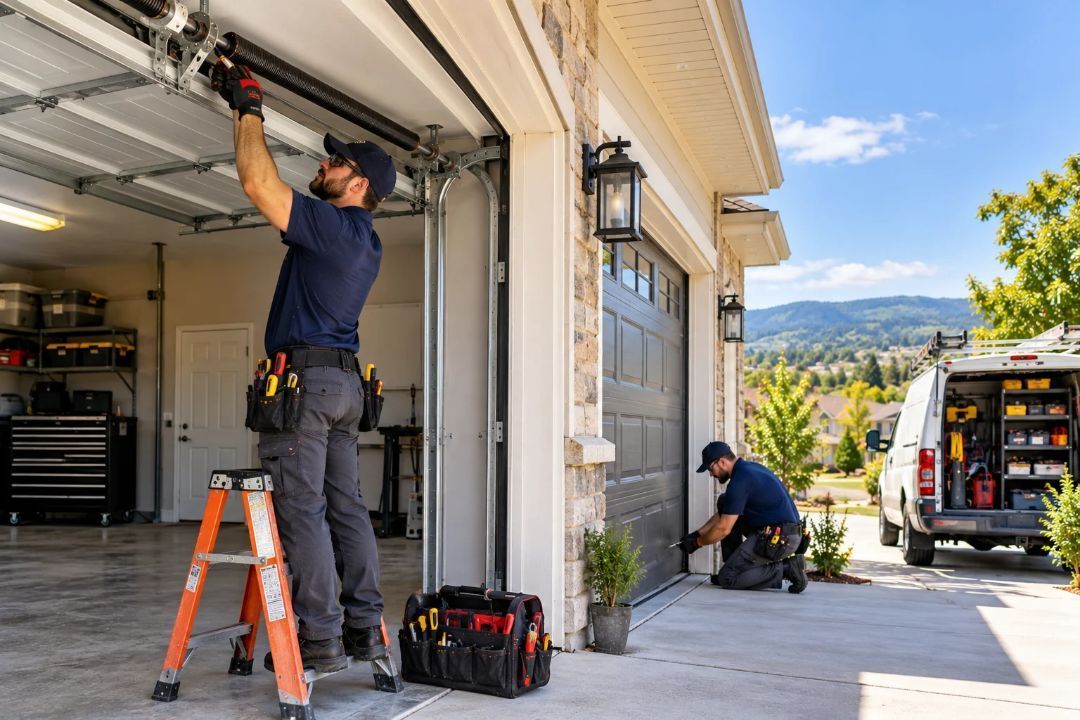
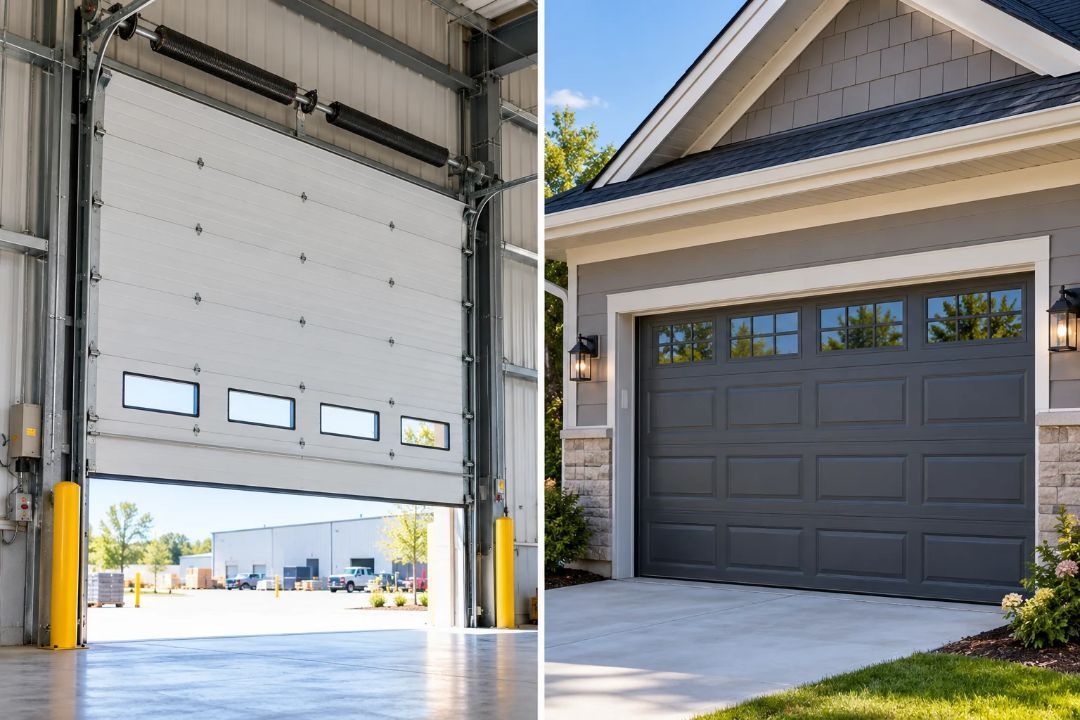
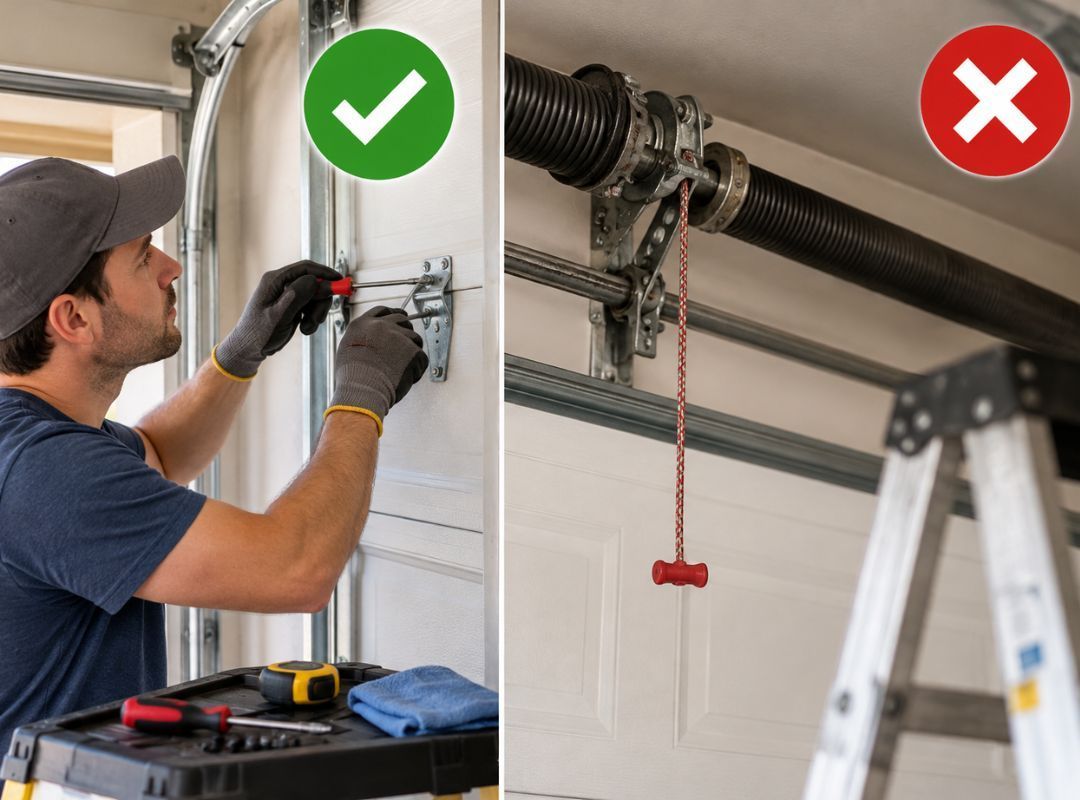
Springs hold the most stored energy. Torsion springs sit on a shaft above the door, while extension springs run along the side tracks. Extension springs should always have a safety cable threaded through them, so a broken spring can’t whip across the garage.
Bottom brackets and lift cables hold the door’s full spring tension. Homeowners should never loosen them. Leave them to a technician.
What Does the Emergency Release Do?
The emergency release is the cord, usually red, that disconnects the door from the opener so it can be moved by hand. It matters most during a power outage.
Northwest Arkansas storms can knock out power for hours, and the release is how you get a car out. Pull it only with the door fully closed when you can.
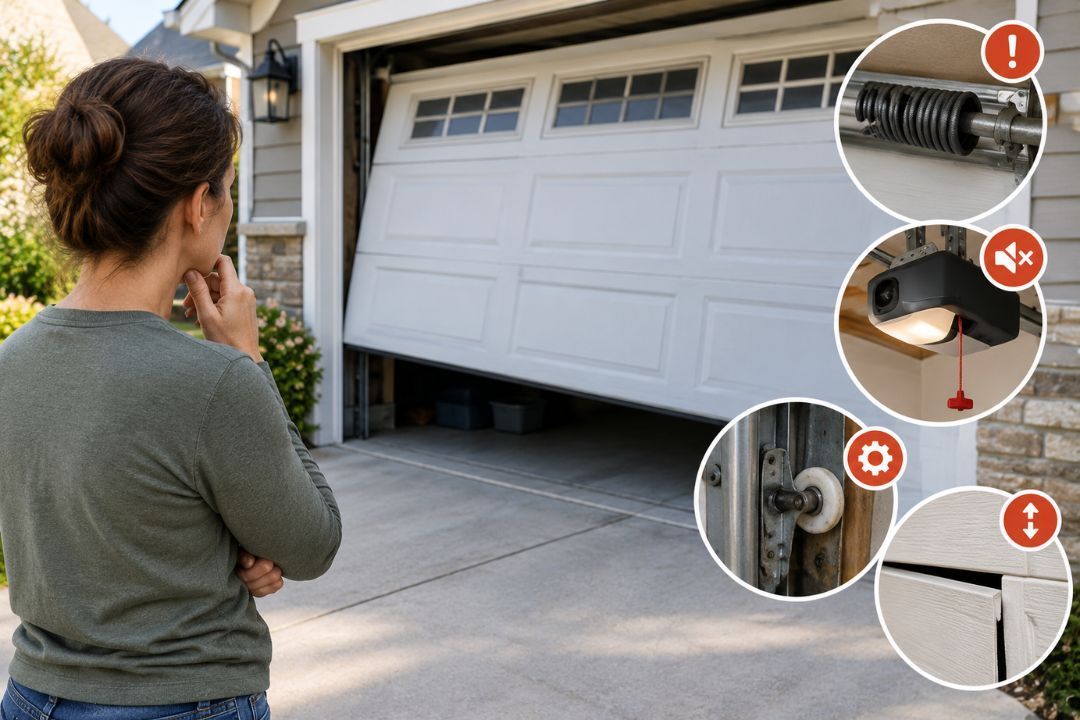
A door with a broken spring can drop hard once released. If the door is heavy, stuck partway, or crooked, keep clear and call for help.
What Security Features Protect Your Home?
Modern openers protect your home and the people in it. Rolling code remotes change their signal with each use, which makes the code hard to copy.
Keypads let family members in without a key hidden under a flowerpot. Fayetteville Garage Door Co. installs keyless entries along with openers and remotes.
Mount the wall button high enough that young children can’t reach it, and keep remotes out of their hands.
Frequently Asked Questions:
1. What are the main garage door safety features?
The main garage door safety features are auto-reverse, photo-eye sensors, the emergency release, and contained springs. Security features like rolling code remotes protect the home from break-ins.
2. How often should I test my garage door’s auto-reverse?
Once a month. The CPSC recommends testing the reversing feature monthly, using a 2x4 laid in the door’s path.
3. Why is my garage door reversing before it closes?
The most common cause is a photo-eye problem, such as misalignment, a dirty lens, or something in the beam. An unbalanced door or a track issue can also cause it.
4. Are old garage door openers unsafe?
Openers made before the 1990s federal requirements may lack reversing systems or photo eyes. Replace an opener without both.
5. Can I adjust garage door springs myself?
No. Springs, cables, and bottom brackets hold the door’s weight under high tension and can cause serious injury. A trained technician should handle all spring work.
Where Can NWA Homeowners Get a Garage Door Safety Check?
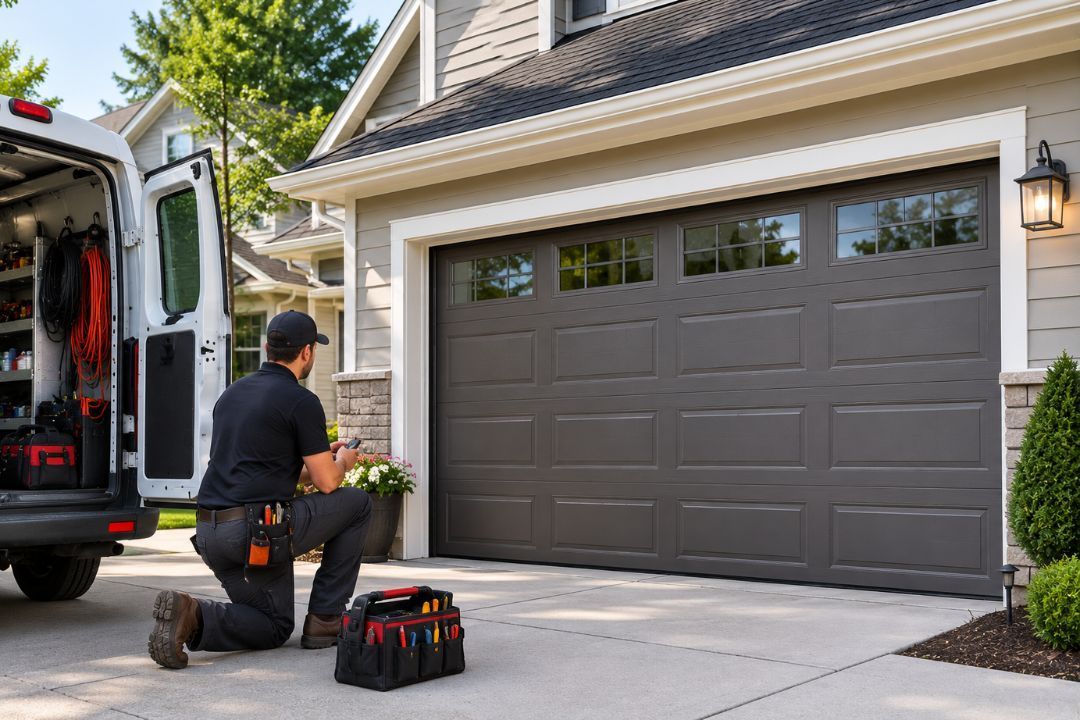
Fayetteville Garage Door Co. provides safety inspections, opener installation, and spring repair across Northwest Arkansas, Southwest Missouri, and Eastern Oklahoma. We have served the region from Fayetteville since 1972.
That includes homes in Fayetteville, Springdale, Rogers, Bentonville, and Centerton. Read what neighbors say in our reviews.
Contact our team or call 479-521-7877 to schedule a safety inspection.