How Long Should a Garage Door Last? Signs of Wear to Watch For
How Long Should a Garage Door Last? Signs of Wear to Watch For
How long does a garage door last? A well-maintained steel garage door often lasts 20 years or more, but its parts wear out on their own schedules. Standard springs are rated for about 10,000 open-and-close cycles, and openers typically last 10 to 15 years. Watch the parts, not just the calendar.
It usually looks like this. A door has had its springs replaced twice, the bottom panel is rusting at the seam, and the opener groans on every trip. Each fix made sense on its own. Together, they are telling you where the door stands.
How Long Does a Garage Door Last?
Most steel and aluminum garage doors last 20 years or more with regular care. Wood doors can last as long, but only with steady upkeep against moisture and sun.
Door panels rarely fail first. Springs, cables, rollers, and openers wear out faster and get replaced along the way.
That means a door’s real lifespan comes down to the panels and the track system. Once panels crack, rust through, or bend out of shape, repairs stop making sense.
How Long Do Garage Door Springs Last?
Garage door springs are rated in cycles, not years. A standard torsion spring is rated for about 10,000 cycles, where one cycle is a single open-and-close.
Your habits decide how that turns into years. At four trips a day, a standard spring lasts roughly seven years. A household that uses the garage as its front door can wear through springs much faster.
High-cycle springs rated well above the standard are available. They cost more up front and make sense on doors that open many times a day.
How Long Does a Garage Door Opener Last?
Garage door openers typically last 10 to 15 years, according to the National Association of Home Builders’ study of home component life expectancy. Heavy use and a poorly balanced door can shorten that.
One sign trumps age. If your opener has no photo-eye sensors near the floor, it predates the federal safety requirement for entrapment protection and should be replaced, no matter how well it runs.
Our technicians installand repair openers for homes across the region.
What Shortens a Garage Door’s Life?
Frequent use, skipped maintenance, weather, and impact damage shorten a garage door’s life the most. A balanced, lubricated, and inspected door wears far more slowly.
The biggest factors:
- Daily use: More cycles mean faster wear on springs, rollers, and the opener.
- An unbalanced door: Weak springs force the opener to do the lifting, which wears out the motor early.
- Moisture: Water sitting at the bottom of the door leads to rust on steel and rot on wood.
- Storms and impact: High winds and a bumper tap can both bend panels and track.
What Signs of Wear Should You Watch For?
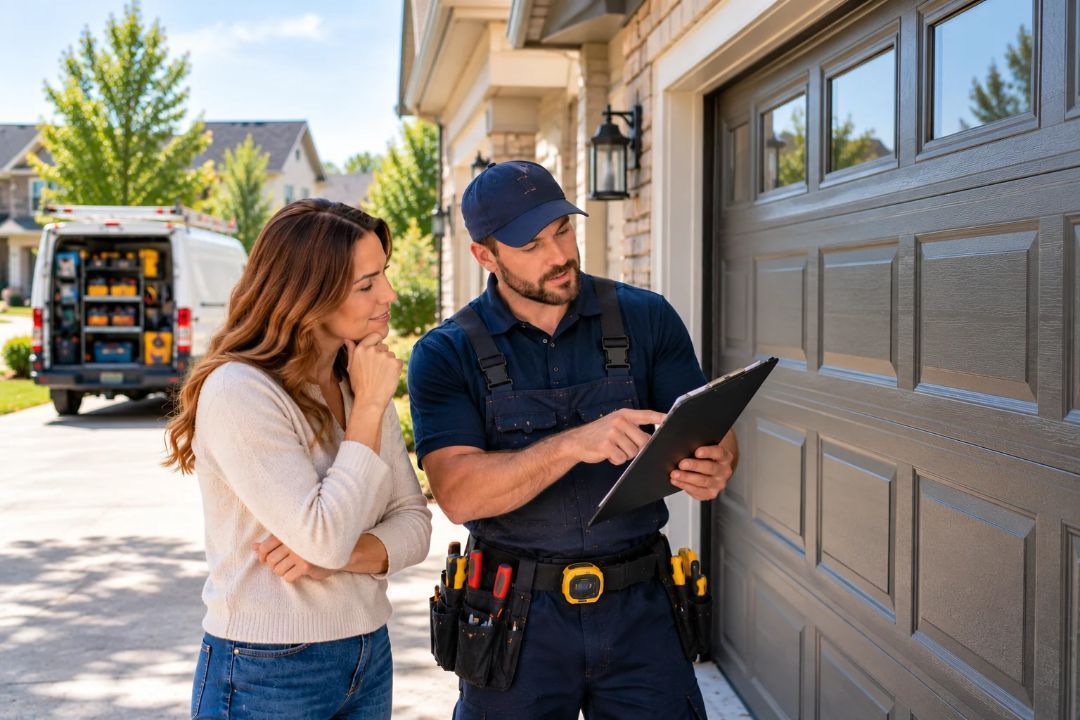
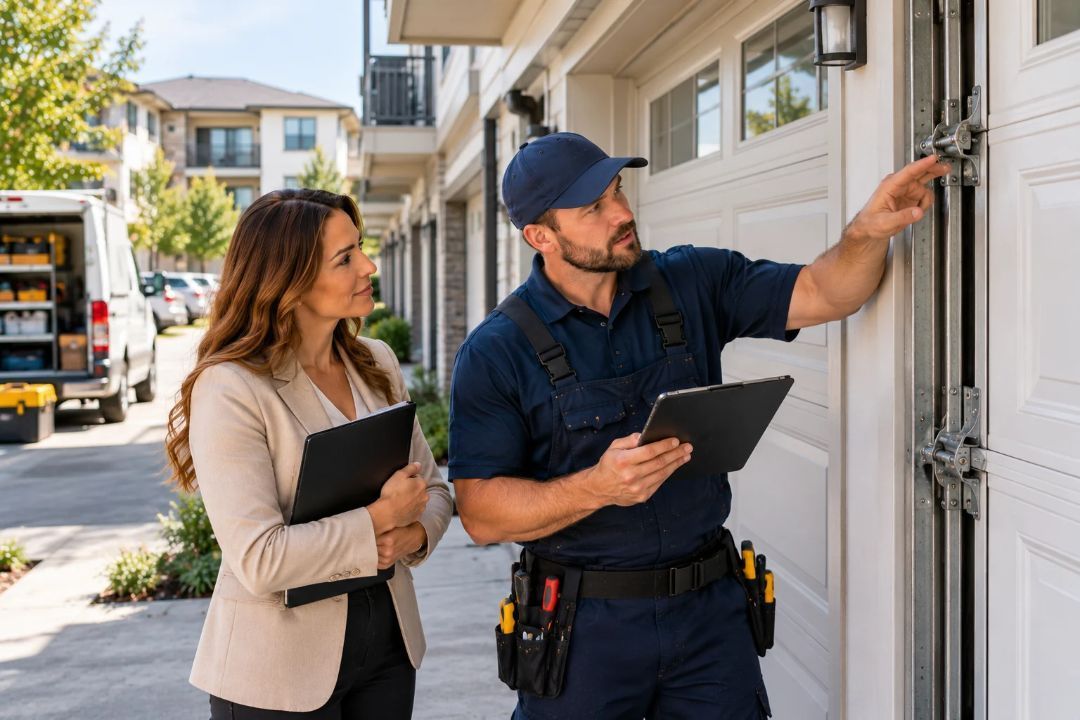
Watch for a door that feels heavy, moves slowly, is noisy, is crooked, or takes a long time to reverse. These signs usually show up weeks or months before a part fails.
Check for:
- Uneven or jerky movement as the door opens or closes.
- Frayed cables or a visible gap in a torsion spring.
- Grinding, popping, or squealing from rollers and hinges.
- Rust, cracks, or dents in panels, especially along the bottom section.
- Daylight under the door from a worn bottom seal.
- A door that doesn’t reverse when something breaks the photo-eye beam.
A safety reversal problem is the one to treat as urgent. Stop using the opener until a technician checks it.
Should You Repair or Replace an Aging Garage Door?
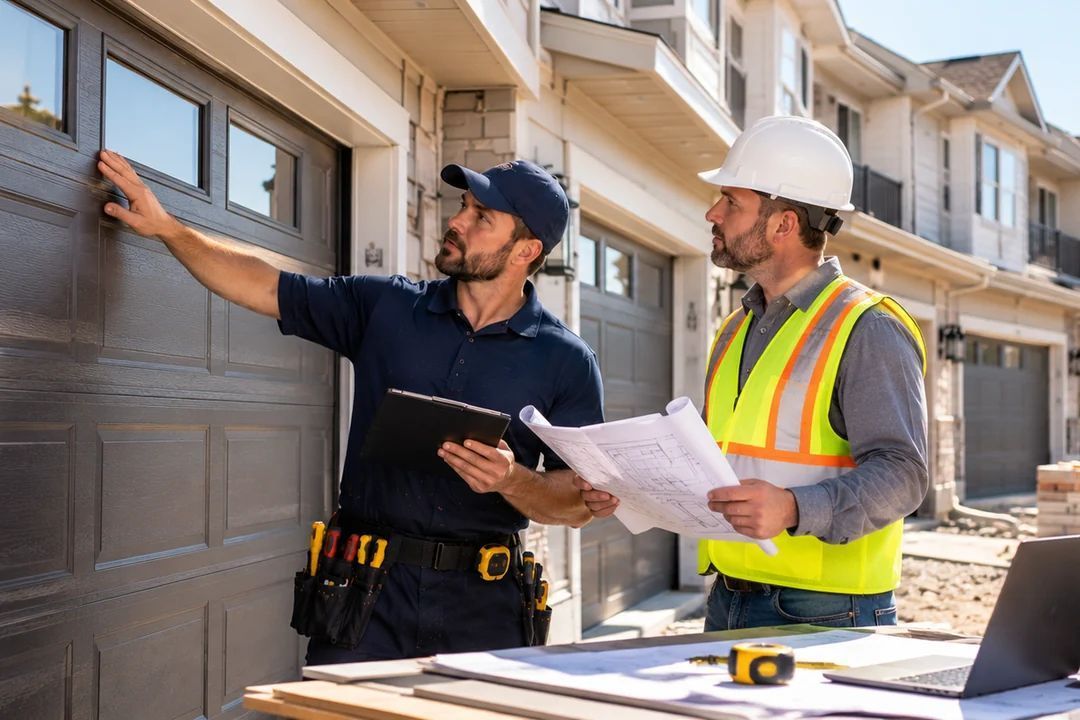
Repair the door when the problem is a single worn part like a spring, cable, or roller. Replace it when panels are damaged, breakdowns keep repeating, or the door has reached the end of its useful life.
A broken spring is not a reason to replace a sound door. Springs are expected to wear out, and a door can outlast several sets.
The math changes when you are paying for repairs on a door with rusted or cracked panels. At that point, each repair buys less time, and a garage door replacement is often the better value.
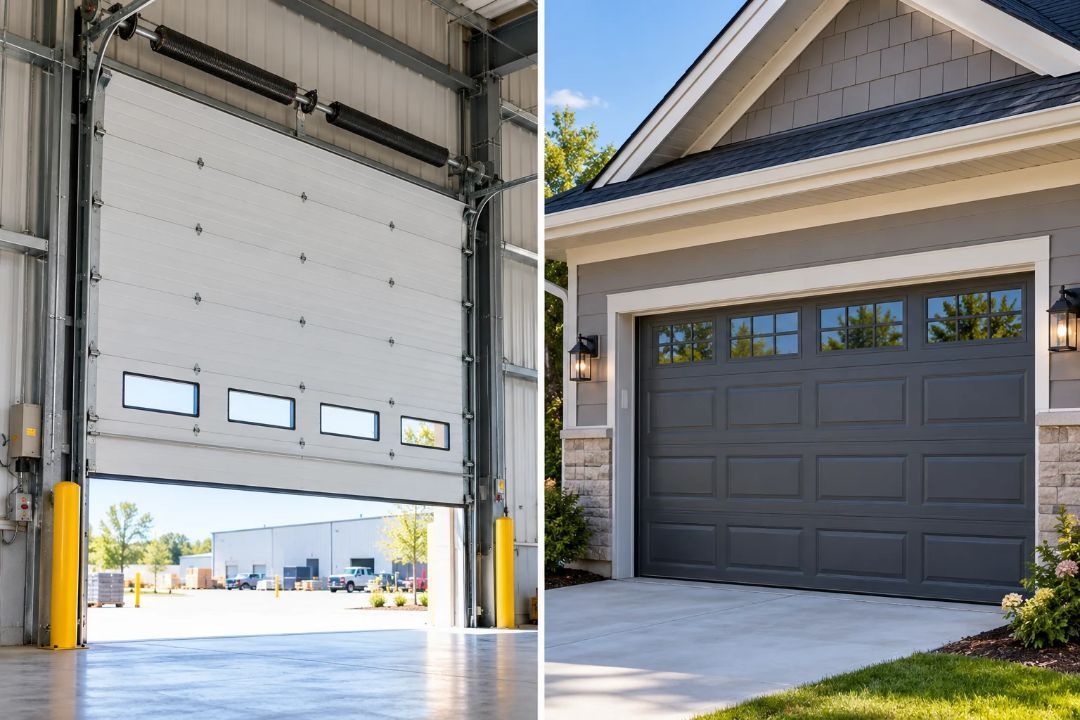
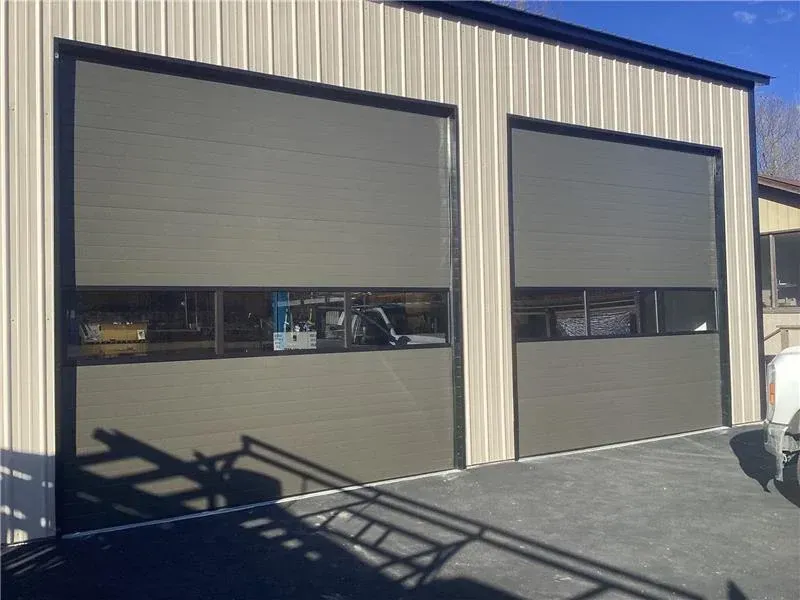
Businesses face the same choice on a faster clock.
Commercial doors cycle far more often, so springs and operators wear out sooner.
Frequently Asked Questions:
1. How long does a garage door last on average?
A well-maintained steel or aluminum garage door commonly lasts 20 years or more. Springs, cables, rollers, and openers usually need replacement during that time.
2. How do I know if my garage door springs are worn out?
Worn springs can make the door feel heavy, lift unevenly, or drift down when you open it by hand. A visible gap in a torsion spring means it has already broken.
3. Is it worth replacing springs on an old garage door?
Usually, yes, if the panels and track are in good shape. Replacing springs costs far less than a new door. If the panels are badly rusted or cracked, replacement may be the better investment.
4. Can regular maintenance make a garage door last longer?
Yes. Lubrication, balance checks, and early replacement of worn rollers and cables reduce strain on the springs and opener. That slows wear on the whole system.
5. How long do garage door cables last?
Cables don’t have a fixed lifespan. They wear from use and rust, so check them during routine service and replace them when strands fray.
6. Where Can NWA Homeowners Get a Garage Door Checked?
Fayetteville Garage Door Co. provides garage door repair, replacement, and safety inspections across Northwest Arkansas, Southwest Missouri, and Eastern Oklahoma. We have served the region from Fayetteville since 1972.
That includes homes in Fayetteville, Springdale, Rogers, Bentonville, and Farmington. If replacement makes sense, we can also walk you through financing options.
Contact our team or call 479-521-7877 to schedule an inspection.