How Often Should Commercial Garage Doors Be Inspected?
How Often Should Commercial Garage Doors Be Inspected?
A trained technician should inspect commercial garage doors at least once a year, according to industry guidance from DASMA, the Door and Operator Manufacturers’ Association. Doors that cycle all day need more frequent inspection. NFPA 80 requires rolling fire doors to be inspected and drop-tested every year, even if they never move.
The door that fails is rarely a surprise to the building. A dock door starts slamming the last foot of its travel. A cable shows a few broken strands. Everyone walks past it for weeks, until the door stops halfway up with a trailer backed in.
How Often Does a Commercial Garage Door Need a Professional Inspection?
Once a year is the minimum for most commercial overhead doors; DASMA recommends a trained technician inspect rolling doors at least annually or on the schedule the door’s manufacturer recommends.
Treat once a year as the floor. The right schedule depends on how often the door opens, what it protects, and what happens to your business when it stops working.
A
rolling steel door on a storage room that opens a few times a week can handle an annual visit. The dock door beside it may not.
Why Do High-Traffic Doors Need Inspection More Often?
Every trip up and down wears the springs, cables, rollers, and operator a little more. A door that opens dozens of times a shift uses up its parts far faster than a door that opens once a day.
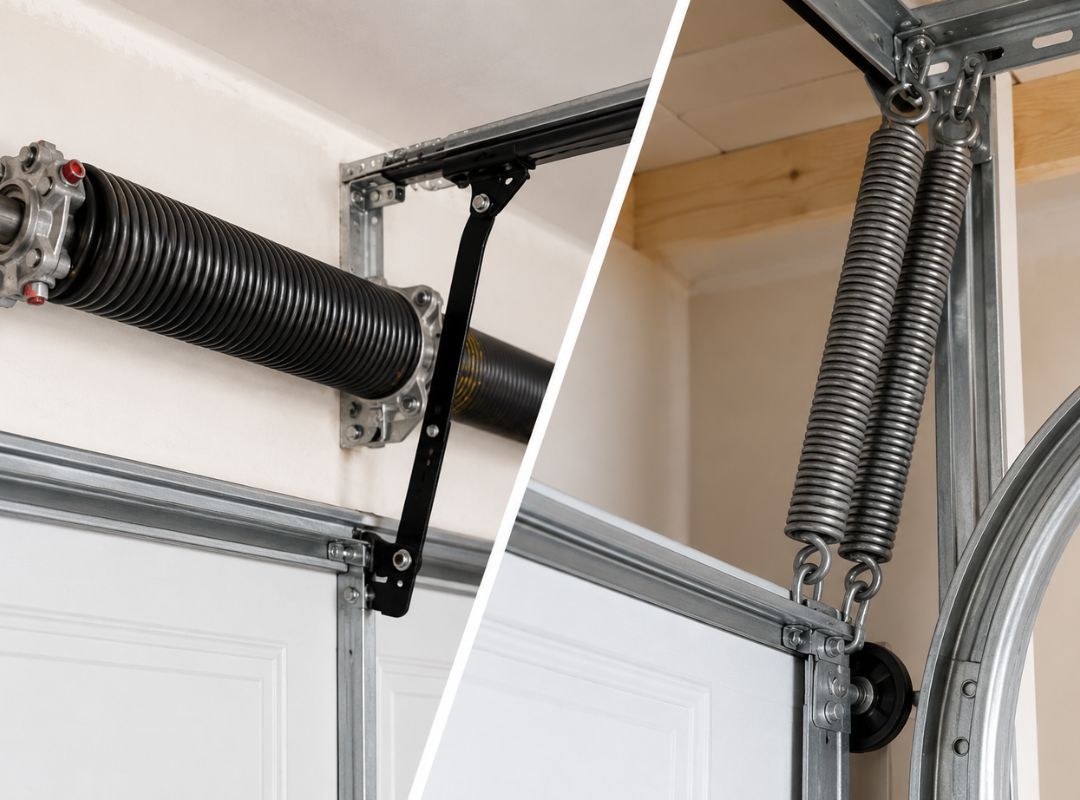
Springs are the clearest example. They are rated for a set number of open-and-close cycles so that a busy door can burn through a spring’s life in a fraction of the time.
A useful habit is counting cycles. Some commercial operators track them, and a technician can use that number to set a schedule that fits the door, not the calendar.
What Are the Inspection Rules for Fire Doors?
NFPA 80, the standard for fire doors, requires rolling steel fire doors to be inspected and drop-tested at least once a year. The rule applies to every fire door, including doors that stay closed and never get used.
A drop test confirms the door closes on its own when its release is triggered, the way it would in a fire. DASMA guidance says a technician trained on rolling fire doors should do the work, and the results should be documented.
Keep those records where you can find them. Your fire marshal or building official has the final say on what your building needs, and they may ask to see proof.
When Should You Call for an Inspection Right Away?
Call for an inspection right away after a severe storm, a vehicle strike, or any change in how the door sounds or moves. DASMA advises evaluating every door in a facility after high winds or flooding, regardless of the last scheduled visit.
That storm guidance matters in Northwest Arkansas, where spring storms can put heavy pressure on large door openings. Other warning signs include:
- Uneven travel: One side of the door rises or lowers ahead of the other.
- New noise: Grinding, popping, or a bang at the top or bottom of travel.
- Frayed or loose cables: Broken strands mean the cable is already failing.
- Slow or missing reversal: The door should stop and reverse when a photo eye or edge sensor is triggered.
- Impact damage: A bent track, panel, or curtain from a forklift or truck.
What Can Your Staff Check Between Inspections?
Staff can do quick visual and operating checks between professional visits. They should look and listen only, and leave every adjustment to a trained technician.
A simple routine is enough. Watch the door through a full cycle, check that the safety reversal works, and look for damage to the tracks, guides, bottom bar, and weather seal.
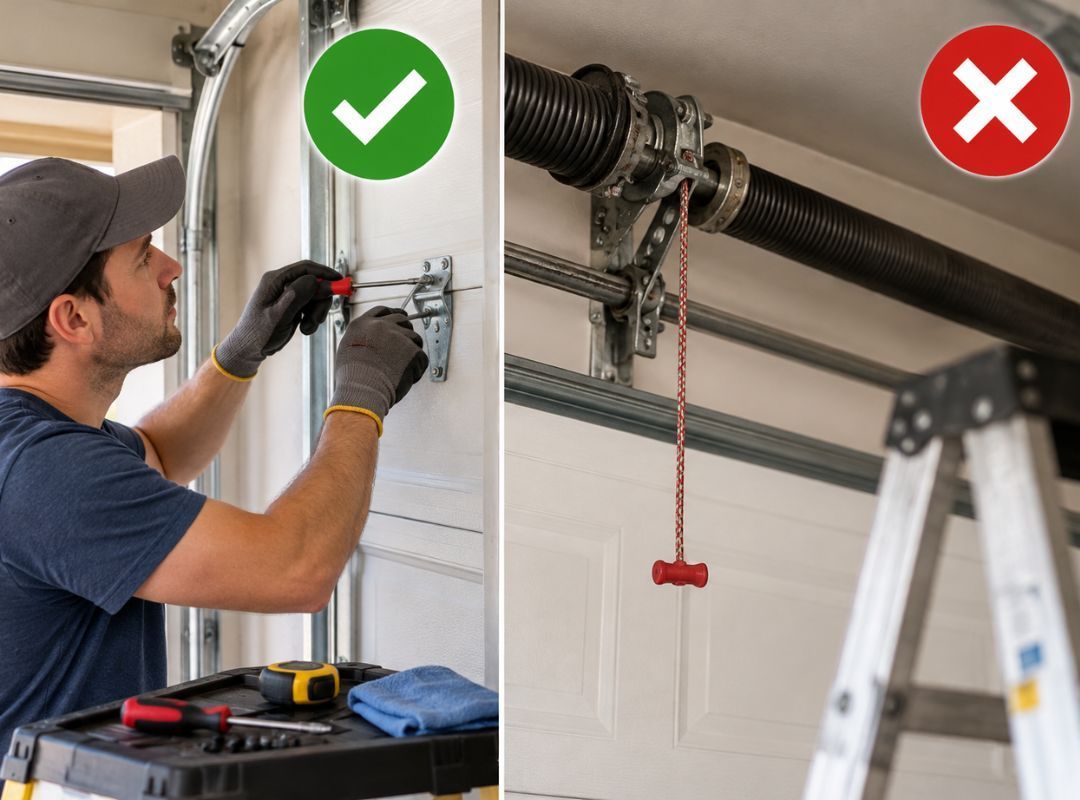
Never touch the springs or the brackets that hold them. DASMA warns that these parts are under extreme tension and can cause serious injury or death if someone untrained tries to adjust them.
:
Frequently Asked Questions:
1. What does a commercial garage door inspection include?
A commercial garage door inspection checks the springs, cables, rollers, tracks, operator, and safety devices on each door. The technician also tests balance and reversal and notes any worn parts that need repair.
2. Do dock doors and levelers need separate inspections?
They can be inspected on the same visit. Dock levelers and dock doors work together, so checking them side by side helps catch problems that affect both.
3. Can my own maintenance staff inspect commercial doors?
Staff can handle routine visual checks and simple operating tests. Spring work, cable replacement, and fire door drop tests should be handled by a trained door technician.
4. Do counter shutters and security grates need inspection too?
Yes. Counter shutters and security grates are rolling doors with springs, guides, and locks, so they wear the same way and should be on the same inspection schedule.
5. What if an inspection finds a problem?
The technician should explain what is wrong, how urgent it is, and what the repair involves. Fixing a worn part early usually costs less than repairing the damage a failure leaves behind.
Where Can NWA Businesses Schedule a Commercial Garage Door Inspection?
Fayetteville Garage Door Co. provides garage door inspections, preventive maintenance, and
commercial door repair for businesses across
Northwest Arkansas,
Southwest Missouri, and
Eastern Oklahoma. We have served the region from Fayetteville since 1972.
That includes warehouses, shops, and retail buildings in Fayetteville, Springdale, Rogers, and Bentonville. Please tell us how many doors you run and how hard they work.
Contact our team or call 479-521-7877 to schedule an inspection.