Emergency Garage Door Repair in Fayetteville: What Qualifies and What to Do First
Few things throw off your day like a garage door that suddenly won't work. Maybe it's stuck halfway with your car trapped inside. Maybe it slammed shut after a loud bang, or worse, it won't close at all and your home is sitting wide open.
In these moments, you need to know two things fast: is this a real emergency, and what should you do right now? Some garage door problems genuinely can't wait, while others are safe to schedule for later.
This guide explains what qualifies as emergency garage door repair, and the safe steps to take before help arrives.
Short Answer
A garage door emergency is anything that leaves your home unsecured, puts someone at risk, or traps your vehicle. That includes a door that won't close, a broken spring or cable, a door off its track, or one stuck open overnight.
Minor issues like noise, slow operation, or a dead remote aren't emergencies and can wait for a scheduled repair. The key question is simple: is your safety or security on the line right now? If the answer is yes, it's urgent.
What Counts as a Garage Door Emergency
Not every problem is urgent, but these situations need prompt attention because they affect your safety or leave your home exposed.
A Door That Won't Close
This is the most common true emergency, because an open garage is an open invitation. It leaves your home, your car, and everything in the garage exposed to weather and intruders.
Many garages also connect directly to the house, so an open door can mean access to your entire home. Leaving your home exposed this way is one of the clearest signs you need urgent help, so a garage door that won't close should never sit until morning.
A Broken Spring or Snapped Cable
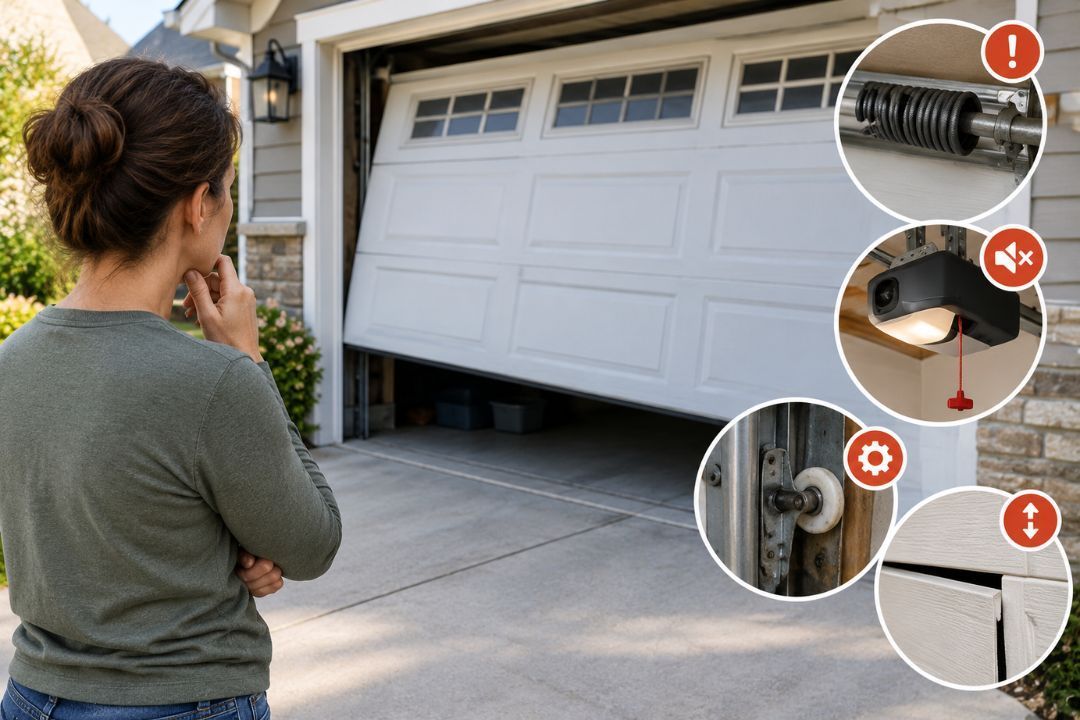
If you heard a loud bang and the door suddenly won't lift, a spring or cable has likely failed. These parts are wound under enormous tension, and a failure makes the door dangerously heavy and unpredictable.
You might see a gap in the spring coil above the door, or a cable hanging loose. Stop using the door immediately and keep everyone clear until a professional can handle it.
A Door Off Its Track
A door that's jumped its track can hang crooked, jam partway, or fall. It's both a security gap and a genuine safety hazard, since a door in this state can come down without warning.
This often happens after something strikes the door or a roller fails. Don't try to force it back onto the track, as that usually makes the damage worse.
When your garage door stops opening, closing, or operating properly, professional
garage door repair in Pea Ridge, AR can help identify the issue and provide a lasting solution.
A Door Stuck Open or Trapping Your Car
A door frozen halfway, stuck fully open, or slammed shut over your car is more than an inconvenience. It can strand you exactly when you need to leave, or leave your home unsecured until it's fixed.
A door stuck open also can't protect anything inside from the weather or from passersby. Both situations count as urgent.
Visible Damage After an Impact or Break-In
If a vehicle has backed into the door, or someone has tried to force it open, the damage can compromise how the door operates and how well it secures your home. Even if the door still moves, bent panels or a warped track can worsen quickly with use. Have it inspected before you rely on it again.
Homeowners dealing with sudden garage door failures can rely on
garage door services in Bella Vista for prompt repairs and maintenance support.
What's Not an Emergency
Plenty of garage door issues are annoying but perfectly safe to schedule for a regular repair visit. These can wait:
- A noisy or squeaky door that still opens and closes normally
- A door that moves a little slowly or slightly unevenly
- Worn weatherstripping or a small draft along the bottom
- A cosmetic dent that doesn't affect how the door operates
- A remote or keypad that stopped working, while the wall button still runs the door
If the door still opens, closes, and locks safely, you have time to book a standard repair rather than an urgent one. Scheduling it sooner rather than later is still wise, since small problems tend to grow, but there's no need to treat it as an emergency.
For unexpected garage door problems, homeowners can count on
garage door services in Elkins for inspections, repairs, and maintenance solutions.
What to Do First: Safe Steps Right Now
When something goes wrong, a few careful steps keep you safe and prevent a bad situation from getting worse:
- Don't force it. If the door won't move normally, forcing it can cause more damage or injury. Stop and assess what's happening before you touch anything.
- Keep clear of springs and cables. These hold extreme tension and can cause serious injury if they release. Never touch, adjust, or poke at them.
- Disconnect the opener if needed. Pull the red manual release cord to separate the door from the opener, but only when the door is fully closed. Never release it while the door is raised, since it can drop under its own weight.
- Secure the opening. If the door is stuck open, do what you safely can to protect your home until help arrives, rather than leaving it exposed.
- Keep people and pets away. Treat a malfunctioning door as unpredictable, and keep everyone at a safe distance until it's repaired.
Once the door is safe, most of these situations call for professional residential garage door repair, since springs and cables aren't something to handle on your own.
How to Secure a Garage That's Stuck Open
An open garage overnight is a real security risk, so if yours won't close, take these steps to protect your home:
- Engage the manual lock if your door has one and it can reach the closed position.
- Use locking pliers on the track. Clamping vice grips onto the track just above a roller can stop the door from being lifted further from outside.
- Block it from inside if the door is down but unsecured, so it can't easily be raised.
- Lock the interior door between your garage and your house, so even an open garage doesn't grant access to your home.
- Don't leave it wide open overnight if you can avoid it. Even a partial, secured close is better than an open garage.
If none of this fully secures the door, it's safer to call a professional than to risk your home overnight.
When to Call the Pros
Once you've made things safe, the fix itself is a job for a technician. Broken springs, snapped cables, and off-track doors all involve high tension and precise work that isn't safe to tackle yourself.
Plus a wrong move can turn a repair into an injury. A professional can diagnose the real problem, get the door working again, and confirm it's properly secure before they leave.
The sooner you make that call, the sooner your home is protected and your door is back to normal. Acting quickly also keeps a single failure from cascading into a larger, more expensive repair.
Homeowners facing unexpected garage door problems can rely on
garage door services in Farmington for quick inspections, repairs, and maintenance support.
Frequently Asked Questions
What counts as a garage door emergency?
An emergency is any problem that leaves your home unsecured, puts someone at risk, or traps your car. That includes a door that won't close, a broken spring or cable, an off-track door, or one stuck open. If your safety or security is affected right now, treat it as urgent rather than waiting.
Is a broken garage door spring an emergency?
Usually, yes. A broken spring makes the door far too heavy to lift safely, and it can leave you unable to open or close it at all. It also makes the door unpredictable and dangerous to operate, so stop using it and call a professional instead of forcing it.
What do I do if my garage door won't close?
First, check for anything blocking the sensors or the door's path, and wipe the photo-eyes if they look dirty or misaligned. If it still won't close, secure the opening as best you can and call for repair, since an open garage leaves your home exposed. Avoid forcing the door down, which can cause further damage.
Is it safe to use my garage door with a broken spring?
No. With a broken spring, the door's full weight falls on the opener or on you, which can damage the opener, cause the door to drop suddenly, or lead to injury. Stop using it right away and have the spring replaced by a professional before operating the door again.
How fast can an emergency repair be done?
Many urgent repairs, like a broken spring or cable, can be handled quickly once a technician is on site, often in a single visit. The sooner you call, the sooner your door is secure again. Reaching out promptly also keeps a small problem from turning into a bigger, costlier one.
Get Your Door Secure Again
A garage door emergency is stressful, but you don't have to handle it alone. Once you've taken the safe first steps, the right team can get your door working and your home secure again.
Homeowners across the area have trusted our
garage door repair in Fayetteville since 1972, and we'll get yours working safely again. Call Fayetteville Door Company at (479) 521-7877 to get your repair scheduled fast.