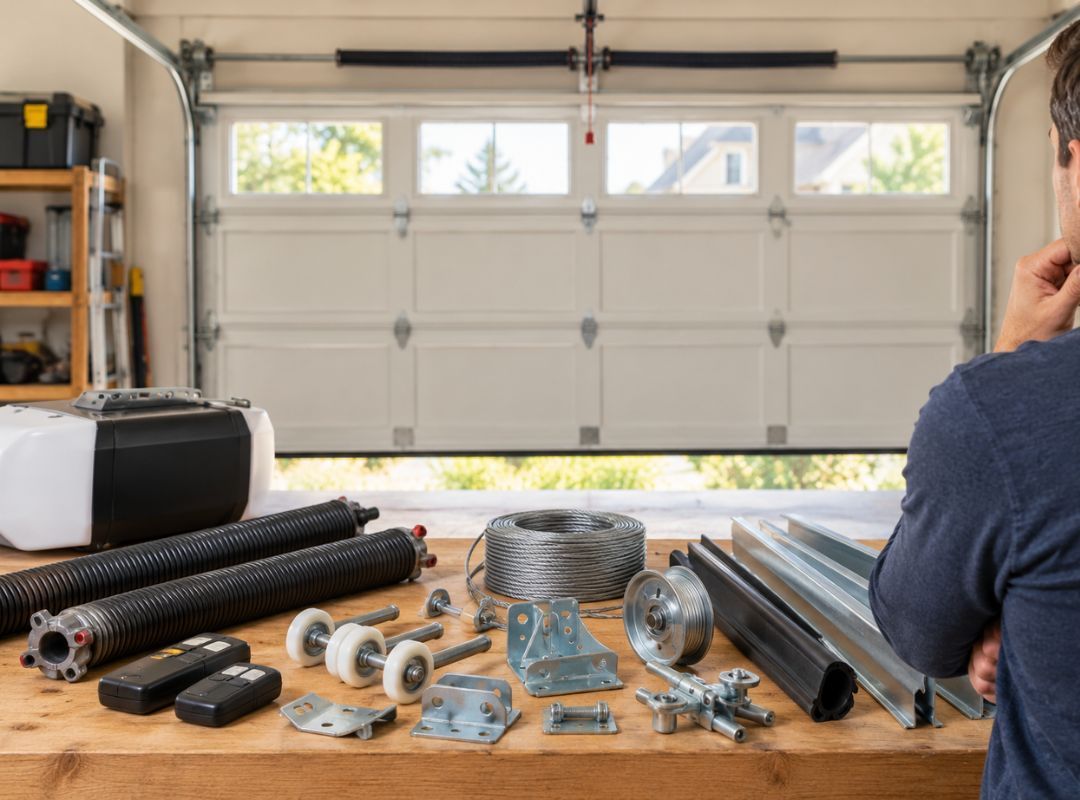
Garage Door Won't Open or Close? 8 Common Causes and How to Fix Them
A garage door that won't budge leaves you with one urgent question: is this a two-minute fix or a call-a-pro problem? The answer depends entirely on what's causing it. Sometimes it's a dead remote battery or a switch bumped by accident.
Other times, it's a snapped spring you should never touch. The trick is knowing the difference before you waste time or risk getting hurt. So when your garage door won't open or close, here are the 8 causes to check. Read ahead and you will also get to know which ones you can safely fix yourself and which need a technician.
Start Here: The Quick Checks
Before you dig in, rule out the simple stuff. These take two minutes and solve a surprising number of stuck doors:
- Press the wall button. If it works but the remote doesn't, it's likely the remote.
- Check that the opener is plugged in and the breaker hasn't tripped.
- Look for the lock light blinking on the wall panel.
- Clear anything sitting in the door's path or on the tracks.
If none of those do it, work through the eight causes below. Homeowners can rely on
garage door services in Pea Ridge for routine maintenance, repairs, and support to keep their doors operating smoothly.
The 8 Most Common Causes and How to Fix Them
These run roughly from the most common and easiest to the more serious. Work down the list, and you'll usually find why your garage door won't open or close.
If your garage door will not open, close, or operate correctly, professional
garage door repair in Farmington, AR
can help identify and fix the issue.
Dead Remote or Keypad Batteries
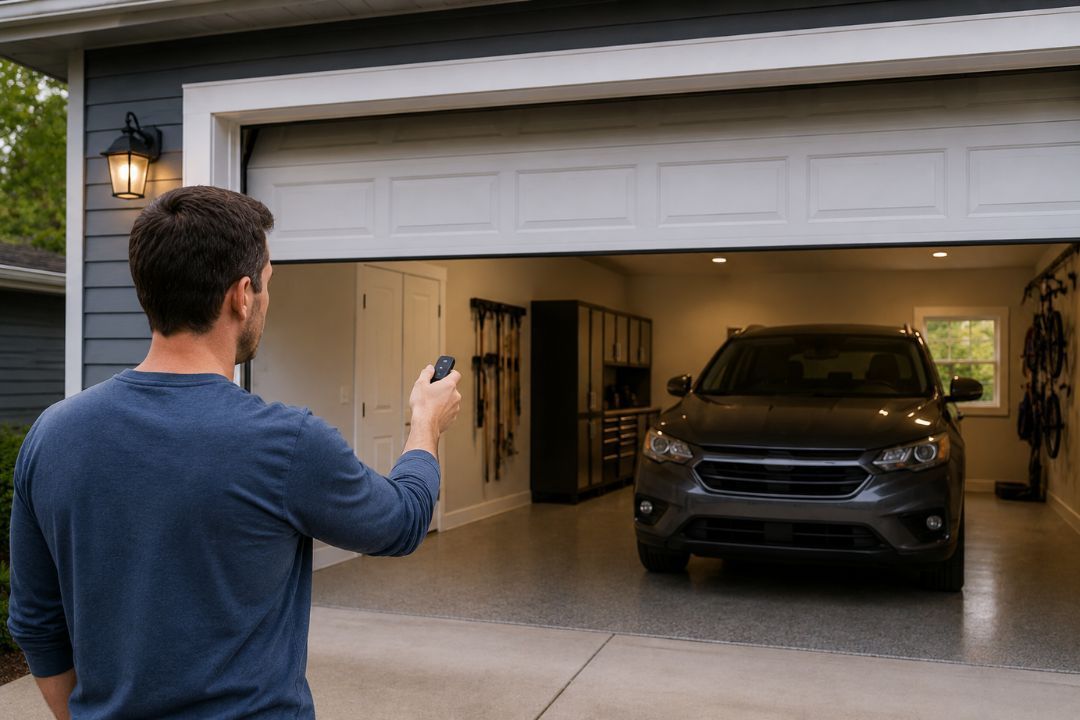
This is the most common cause and the easiest to miss. Batteries fade slowly, so the remote's range shrinks before it quits entirely, which is why you sometimes have to stand right under the door to get a response. If the wall button works but the remote doesn't, this is almost certainly it.
How to fix it: A simple DIY job. Open the remote and keypad, swap in fresh batteries, and mind the polarity. Test again. If both the remote and wall button fail, move to the power check next.
The Opener Lost Power
If the unit is silent and dark, it may not be getting electricity. A cord can shake loose over time, and a tripped breaker or GFCI outlet cuts power without warning.
How to fix it: Do it yourself. Confirm the opener is plugged in, then test the outlet with another device. If the outlet is dead, reset the breaker or GFCI at your panel. A surprising number of "dead" openers come right back with a reset.
Lock or Vacation Mode Is On
Most wall panels have a lock button that disables the remotes, and it gets bumped by accident all the time. When it's on, the wall button still works but no remote will, and you'll often see a blinking light on the panel.
How to fix it: An easy DIY fix. Press and hold the lock button on the wall panel for five to ten seconds until the light goes solid, then test the remote again.
Blocked or Misaligned Safety Sensors
If your door opens fine but won't close, the safety sensors are the usual reason. These photo-eyes sit a few inches above the floor on each side, and if they're dirty, bumped out of line, or blocked, the door won't close and one sensor light usually blinks.
How to fix it: DIY-friendly. Wipe both lenses gently with a soft cloth, clear anything breaking the beam, and adjust the brackets until both lights glow solid. Even direct sunlight hitting a sensor can interfere, so check for that too.
Something's Obstructing the Tracks
A stray tool, a stone, built-up leaves, or a child's toy in the track can stop the door cold. The system senses the resistance and shuts down to protect itself, and the door may reverse on contact.
How to fix it: Safe to handle yourself. Look along both tracks from top to bottom and clear anything lodged in the channel. Wipe the tracks clean and check for obvious dents or bends before testing again.
A Broken Spring
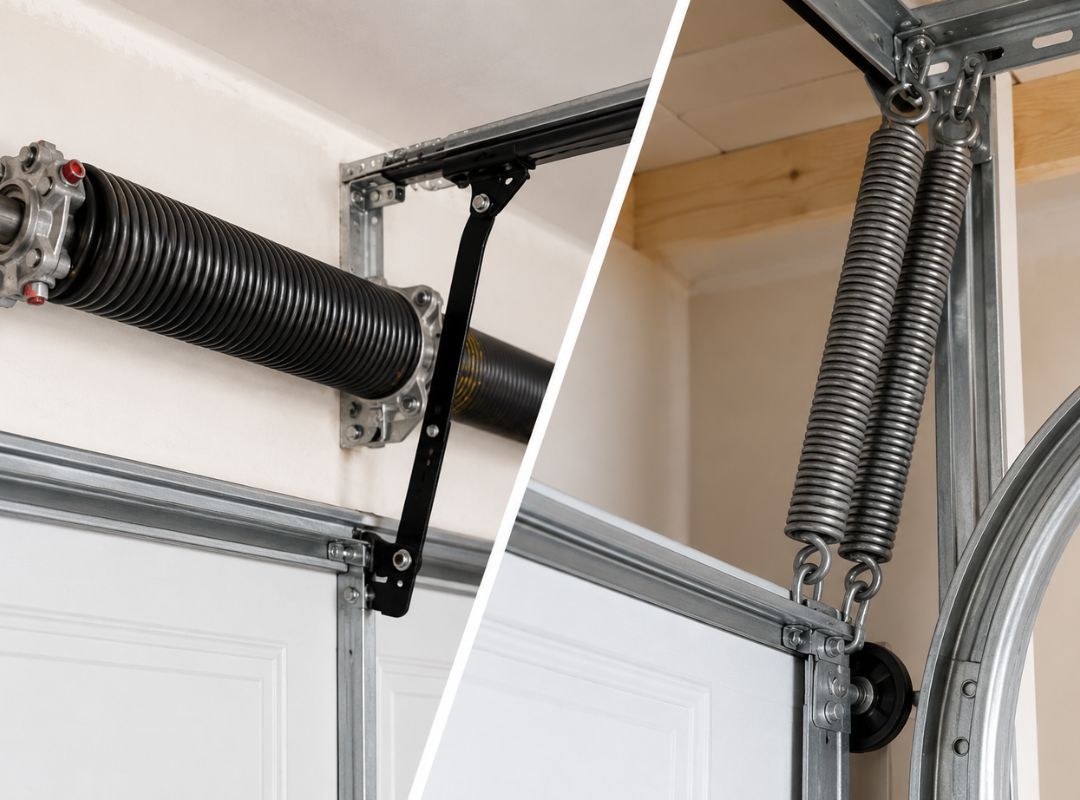
If the motor runs but the door won't lift, or you heard a loud bang from the garage, a broken spring is the likely culprit. The springs do the heavy lifting, so when one snaps, the door becomes far too heavy for the opener to raise. You may see a visible gap in the coil above the door.
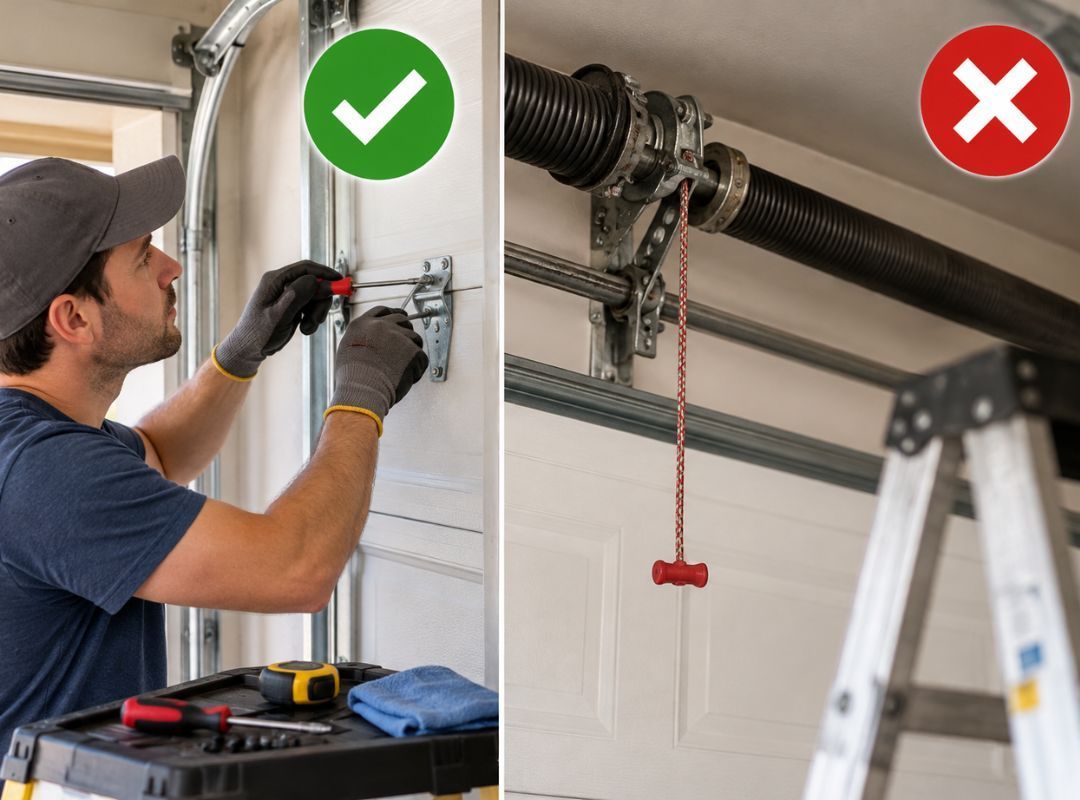
How to fix it: Call a professional. Garage door springs are under extreme tension and can cause serious injury, so this is never a DIY repair. A technician handles the broken garage door spring repair safely and checks the cables and balance while they're there.
A Snapped or Frayed Cable
The lift cables work alongside the springs to raise and lower the door evenly. When one frays or snaps, the door can hang crooked, stick, or drop unexpectedly, since it's no longer properly supported.
How to fix it: This one's for a pro. Cables are tied into the same high-tension system as the springs and can whip loose if mishandled. A technician will replace them and realign the door safely, and a garage door company in Westville, OK can handle this type of cable repair when professional service is needed.
Worn Opener Gears or Motor
If you press the button and hear the motor humming or grinding but the door doesn't move, the opener's internal gears may be stripped and may require professional garage door opener repair. Plastic shavings near the motor unit are a telltale sign, and a burning smell points to the motor itself.
How to fix it: If your car's trapped or the door won't secure your home,
emergency garage door repair
is the fastest way to get it sorted safely. Gear and motor repairs need the right parts and know-how, and guesswork here usually turns a fixable issue into a full opener replacement.
If your garage door is stuck or not operating correctly, professional
garage door repair in Elkins, AR
can help diagnose and resolve the issue.
What You Should Never Try to Fix Yourself
Some parts are simply too dangerous to touch without training. Garage door springs and cables hold enough tension to cause serious injury if they let go. If you see a snapped spring, a gap in the coil, a frayed cable, or a door that's suddenly too heavy to lift, stop right there and contact a professional for garage door repair in Siloam Springs, AR. The same caution goes for the opener's internal gears and logic board. These are jobs for a technician, every time. These are jobs for a technician every time, and they're the core of any proper residential garage door service.
Frequently Asked Questions
Why won't my garage door open at all?
Start with the simple causes: dead remote batteries, a tripped breaker, or lock mode switched on by accident. If the motor runs but the door won't lift, a broken spring is the most likely reason, and that needs a professional. Working down from the easy fixes usually points you to the cause fast.
Why won't my garage door close all the way?
Nine times out of ten, it's the safety sensors. Clean both photo-eyes near the floor, make sure they're aligned so both lights stay solid, and clear anything blocking the beam between them. If it still stops short, the close-limit setting on the opener may need a small adjustment.
Why does my garage door open but not close?
This almost always comes back to the sensors or an obstruction. The door opens because the safety system only blocks closing, not opening. Wipe and realign the photo-eyes, clear the door's path, and check that nothing is sitting on the tracks.
Why does my garage door reverse before it closes?
That's the auto-reverse safety feature doing its job, usually triggered by a blocked or misaligned sensor, or something in the door's path. Clean and realign the sensors first. If nothing's in the way and it still reverses, the opener's limit settings likely need adjusting by a technician.
Can I fix a garage door that won't open myself?
Sometimes, yes. Batteries, power resets, lock mode, sensor cleaning, and clearing the tracks are all safe DIY fixes. But anything involving the springs, cables, or motor is a job for a professional, since those carry real injury risk and need the right tools.
How much does it cost to fix a garage door that won't open?
It depends entirely on the cause. A sensor realignment or battery swap costs little to nothing, while a spring or cable replacement runs more because of the parts and labor. Requesting a quote once the problem is diagnosed gives you an accurate number.
Get Your Door Moving Again
A garage door that won't open or close is more than a hassle, it can leave your car stranded or your home exposed. Many causes are quick, safe fixes you can handle yourself. When it's a spring, a cable, or a worn opener, though, that's where the right help makes all the difference.
As Northwest Arkansas's local garage door experts since 1972, we've fixed just about every stuck door you can imagine, and we'll get yours working safely and correctly. Call Fayetteville Door Company at (479) 521-7877 to request a quote.
Choosing a
professional garage door company in Bella Vista, AR ensures your garage door receives expert service from trained technicians.