Garage Door Repair vs Replacement: How to Know Which One You Need
Your garage door is giving you trouble again, and you're stuck on the same question every homeowner faces: do you patch it up one more time, or bite the bullet and replace it?
Pour money into an old door and you may be throwing it away. Replace a door that had years left and you've overspent. The good news is that the decision to repair or replace a garage door usually comes down to a few honest questions, not a guess.
Here's how to know which one you need, without the pressure of a sales pitch.
Quick Answer: Repair or Replace?
Repair your door if it's under about 15 years old, the problem is a single part, and the fix costs less than half the price of a new door. That covers most everyday breakdowns.
Replace it if the door is 15 years or older, keeps failing in different ways, has structural or panel damage, or lacks modern safety features. For homeowners in the area,
garage door installation in Westville, OK can provide a properly fitted replacement when repair no longer makes sense. When repairs start stacking up, a new door is usually the smarter choice, and
garage door opener installation can be handled at the same time if the existing opener is also outdated..
When your garage door stops working properly, scheduling
garage door repair in Goshen, AR
can help restore safe and reliable operation.
Start With Three Questions About Your Door
Before you call anyone, walk through these three questions so you can have a more informed conversation with a garage door company in Siloam Springs, AR about whether repair or replacement makes sense. Together, they point you toward the right answer more reliably than any single symptom, and they make the repair or replace garage door decision far less overwhelming.
1. How Old Is Your Garage Door?
Age is the biggest factor. Most garage doors last 15 to 30 years, and 15 is the tipping point professionals watch for. Under 15 years, a well-kept door usually has plenty of life left, so repair makes sense. Past 15, the metal is fatigued, parts get harder to find, and repairs start to feel like borrowed time.
2. What's Broken?
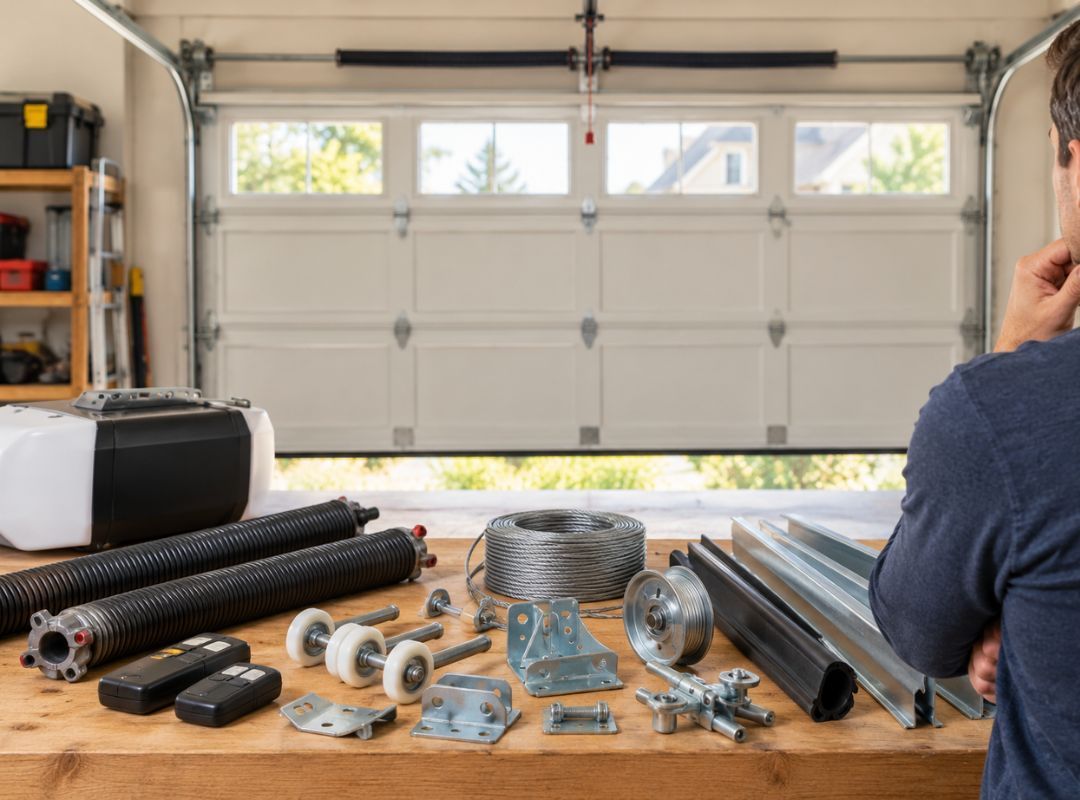
Look at what failed. A single worn or broken part, like a spring, a roller, or a cable, is normal wear and a straightforward fix. These are designed to be replaced, much like tires on a car. A broken spring alone is rarely a reason to replace the whole door, and knowing the garage door spring replacement cost helps you see how minor that repair really is. Structural problems are the opposite story, and we'll get to those.
3. How Often Does It Break Down?
This is the question people skip, and it matters most. One repair is maintenance. Three or more in 18 months is a pattern, and it points to something bigger. On an aging door, fixing one part just shifts stress to the next. A weak spring strains the cables, worn rollers drag on the opener, and an unbalanced door wears everything faster. That cascade is the real signal it's time to replace.
Problems Worth Fixing (Not Replacing)
Plenty of issues are simple repairs on a door that still has good years ahead. If your door is reasonably young and the trouble is isolated, fixing it is almost always the right call:
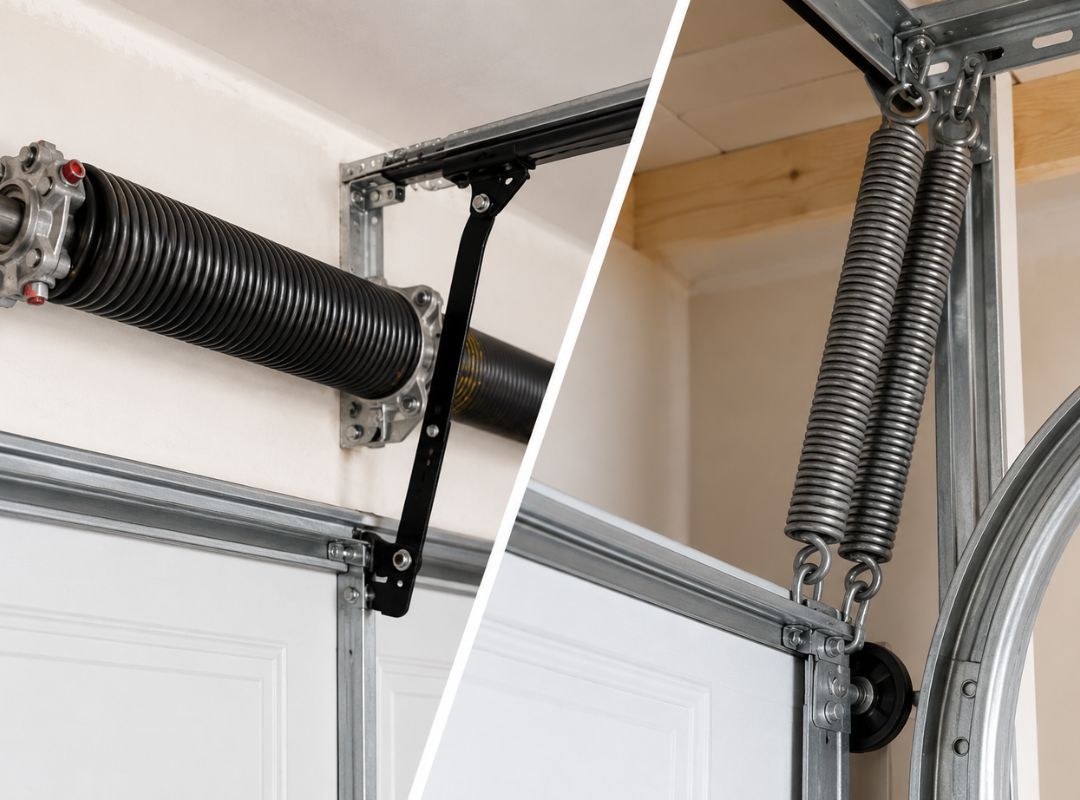
- A broken or worn torsion or extension spring
- Frayed or snapped cables
- Worn rollers or noisy hinges
- A single dented panel from a minor bump
- Misaligned or dirty safety sensors
- An opener that needs a repair, not a replacement
If you are experiencing these signs, you should book
residential garage door repair
services and get your door running again for a fraction of a new one.
Signs Your Door Has Reached the End
Other times, repairs are just delaying the inevitable. Lean toward a new door if you see any of these:
- The door is 15 to 30 years old and problems keep coming
- You've paid for several repairs in the past year or two
- Multiple panels are cracked, rotted, warped, or badly dented
- The frame is warped or the door sags when it lifts
- It was made before 1993 and has no auto-reverse safety feature
- Parts are discontinued and hard to source
- Thin, uninsulated panels are driving up your energy bills
A new door also brings a fresh warranty, quieter operation, better insulation, and a strong payback, since a replacement returns around 90% of its cost at resale. If you're weighing that route, it helps to know the new garage door cost before you decide. Homeowners planning to upgrade their property can consider garage door installation in Centerton for a professionally installed and long-lasting solution.
The 50% Rule: Your Money Tiebreaker
When you're still on the fence, this rule settles it. Add up the repair estimate, or the total of several repairs your door needs at once, and compare it to the price of a new door.
Under half, repair it. At or over half, replace it. And if you total your repairs from the last two years and they're closing in on the cost of a new door, the pattern matters more than any single bill. The one exception is a one-time accident, like a car tapping a panel on an otherwise excellent door, where a repair still wins.
Get an Honest Assessment for Your Garage Repair and Replacement
The truth is that whether to repair or replace a garage door depends on your specific door, and that's easiest to judge in person. Some doors have years of life left in them, and some are quietly costing you more with every repair.
As Northwest Arkansas's local garage door company since 1972, we've guided homeowners through this decision for decades, and we'll tell you straight whether a repair will do or a replacement is the wiser investment. Call Fayetteville Door Company at (479) 521-7877 to request an honest assessment and a clear quote.If repairs are no longer enough, professional
garage door installation in Prairie Grove, AR can provide a reliable upgrade that improves both performance and appearance.
From repairs to replacements, trusted
garage door services Tontitown, AR can help keep your system operating safely and efficiently.
Frequently Asked Questions
How much does it cost to replace a garage door spring?
In Fayetteville, the garage door spring replacement cost usually runs $150 to $350 per spring, with full jobs often landing around $300 to $540. The final price depends on the spring type, your door's size and weight, and whether cables or other parts need replacing too. An on-site estimate gives you an exact figure.
Should I replace one spring or both?
Both, if your door uses two. They wear at the same rate, so if one has broken, the other isn't far behind. Replacing both at once adds only a little to the cost, keeps the door balanced, and saves you a repeat visit soon after.
How long do garage door springs last?
Torsion springs typically last 8 to 15 years, and extension springs 7 to 12. Lifespan is measured in cycles, so the more you use the door each day, the sooner they wear out. Regular maintenance can help you get the most out of them.
Why is garage door spring replacement so expensive?
Most of the garage door spring replacement cost is skilled labor, not the part itself. Springs sit under enormous tension, so replacing them safely takes training, specialized tools, and careful tension adjustment. You're paying for the expertise that keeps the job safe and the door working right.
What are the signs of a broken spring?
Common signs include a loud bang from the garage, a door that won't open or feels extremely heavy, a visible gap in the torsion spring, or a door that opens crookedly. If your garage door won't open after a loud snap, a broken spring is almost always the reason.
Is it cheaper to replace the springs myself?
The parts are cheaper, but the risk isn't worth it. Springs under tension can cause severe injury, and improper installation can damage the door or opener. For safety and to protect the rest of the system, this is a job best left to a professional.